Stadium of Light — Sunderland AFC
Built on the bones of Wearmouth Colliery, the Stadium of Light is a 49,000-capacity ground that still carries the weight of a city that lives and breathes football.
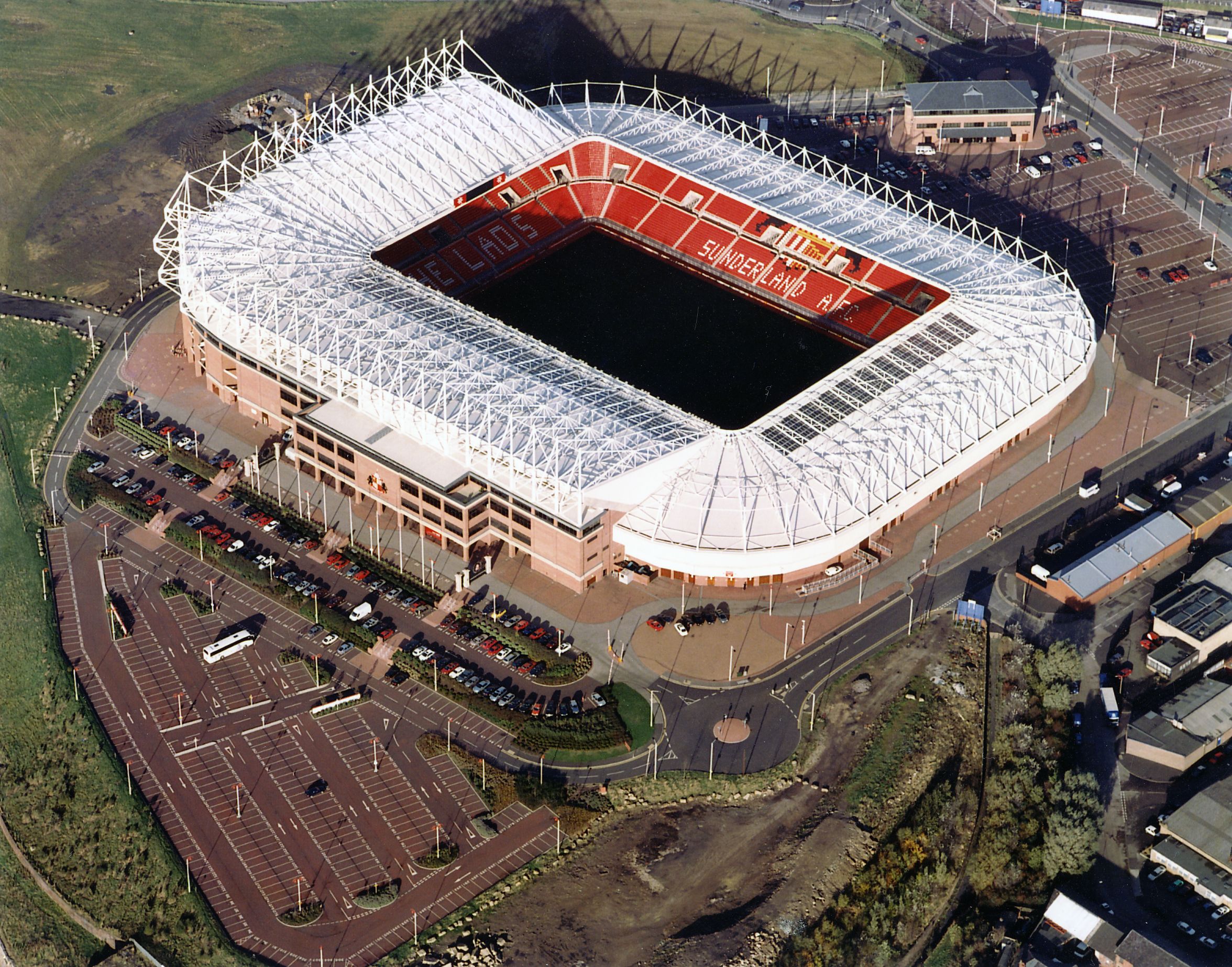
There are big grounds and there are grounds that feel big in a different way — not just in capacity, but in what they carry. The Stadium of Light, when it's full or close to it, is one of the loudest and most intimidating arenas in English football. When it's half-empty, which has happened more often than Sunderland supporters would care to admit during some grim years in the lower reaches of the Football League, it can feel like a cathedral with no congregation. That tension — between what this place was built to be and what the club has sometimes been — is exactly what makes it worth the trip.
Where They Come From
Sunderland is a city that has never quite been given its due. Sitting on the north bank of the Wear, it spent generations defined by shipbuilding and coal mining — industries that shaped not just the economy but the character of the people. When the pits closed and the yards fell silent, football became something more than a pastime. It became the thing that held the identity together. The Stadium of Light sits on Millennium Way in Monkwearmouth, on the very site of Wearmouth Colliery — one of the most productive pits in the north-east. That's not a footnote. That's the whole story. The ground was built where the miners worked, and the supporters who fill it are, in many cases, the grandchildren and great-grandchildren of those same men. You don't get that kind of connection at a retail park on the edge of a ring road.
First Impressions
The approach from St Peter's Metro station takes you along the riverside, and the sheer scale of the place announces itself before you've rounded the corner — four substantial stands, modern uprights for the floodlights, and a bulk that dominates the low-rise surroundings of Monkwearmouth. Opened in 1997 to replace Roker Park, it was built in phases, with the North Stand added later to bring capacity up towards 49,000. The exterior is functional rather than beautiful — red brick and steel, the kind of late-nineties design language that was everywhere at the time — but the interior is something else. The bowl is steep and tight, particularly in the North Stand and the South Stand behind the goal, and when the noise builds it builds fast. The pitch is a proper 105 by 69 metres of grass, well-maintained, and the sight lines from almost anywhere in the ground are excellent. A bronze statue of Bob Stokoe, arms outstretched in that famous Wembley sprint, stands outside as a reminder of what this club once was and what it still aspires to be.
Away Day Reality
Away fans are housed in the upper tier of the North Stand, and it is — let's be honest — a mixed experience. The view is fine, genuinely good in fact, but you are a long way from the pitch and the separation from the home support means the atmosphere around you can feel thin unless you've brought a decent following. The lower tier of the North Stand is sometimes allocated for larger away followings, which is considerably better — closer to the action, more noise, more of a proper away end feel. Sunderland supporters are passionate and can be hostile, but they're not the sort of crowd that makes an away day feel threatening. Expect noise, expect passion, and expect to be reminded at length that you are not welcome. That's as it should be.
The Journey In
The Tyne and Wear Metro is the only sensible way to arrive. There is literally a station called Stadium of Light on the Metro network — platform one or two, take your pick, seven minutes' walk to the turnstiles — which tells you everything you need to know about how central this ground is to the city's identity. St Peter's station is marginally closer at six minutes if you prefer. From Newcastle Central, you're looking at around 25 minutes on the Metro via the Yellow Line, which makes this one of the more straightforward away days in the north-east. Driving is possible but the parking situation around Monkwearmouth on matchday is the usual urban chaos, and with the Metro this good there's really no argument for it. The walk from either station takes you past the Wearmouth Bridge and along the river, which on a clear winter afternoon is genuinely atmospheric.
The Arc
Sunderland's story is one of the most dramatic in English football — and not always in the way the club would choose. Five First Division titles, an FA Cup win in 1973 that produced that Stokoe sprint, and then decades of turbulence: relegations, near-misses, brief returns to the top flight, and a catastrophic slide that took them all the way down to League One by 2018. The Netflix documentary series Sunderland 'Til I Die captured that period with an honesty that was almost painful to watch, and it introduced the club to a global audience who had never previously thought about the north-east of England. The recovery since — back to the Championship, a young squad, a renewed sense of direction — has been real, and the ground feels different when the team is going somewhere. That's the thing about a place this size: it rewards ambition. When the project is working, 40,000 people in red and white stripes make a noise that you will not forget.
Before and After
There are plenty of options in the area, though none of the nearby pubs have a confirmed away-friendly status, so use your judgement and read the room — particularly on derby days against Newcastle or Middlesbrough, when the temperature rises considerably. That said, here are the options worth knowing about:
- The Colliery Tavern (12 Southwick Rd, Monkwearmouth) — the closest pub to the ground at barely 250 metres, a proper local with a strong rating and the kind of pre-match buzz you'd expect from something this near the turnstiles.
- The Wheatsheaf (207 Roker Ave, Monkwearmouth) — a short walk up Roker Avenue, well-regarded and a reasonable option if you want something a little further from the main crowds.
- The Saltgrass (Ayres Quay, Hanover Pl) — down by the quayside, a solid rating and a bit of a different feel to the matchday pubs closer to the ground.
- Websters Ropery (Ropery Rd) — one of the highest-rated options in the area, worth the slightly longer walk if you want a decent pint in calmer surroundings before kick-off.
- The Ship Isis (26 Silksworth Row) — the best-rated pub on this list, tucked into the town centre end of the walk. If you're coming in on the Metro and want a pint before heading to the ground, this is the one to aim for.
- The Dun Cow (9 High St W) — a Sunderland institution on the High Street, well-rated and worth knowing about for post-match if you're not rushing for the Metro.
- The Keel Tavern (Keel Square) — on the regenerated Keel Square development near the city centre, highly rated and a good shout if you want something a bit more modern.
Inside the ground, the concourses are wide and well-organised for a ground of this size, and the catering is a step above what you'd find at many Championship venues. The programme is worth picking up — it's a proper publication, not a glossy afterthought. And if you end up in the North Stand when the home end is in full voice, you'll understand immediately why this place, at its best, is one of the great matchday experiences in English football.
Track every ground you visit
Log your visits, discover new grounds nearby, and see your groundcount grow.
| Download on the App Store | Get it on Google Play |