Bramall Lane — Sheffield United
Opened in 1855, Bramall Lane is the oldest major football ground in the world still in use. Sheffield United's home is compact, loud, and utterly itself.
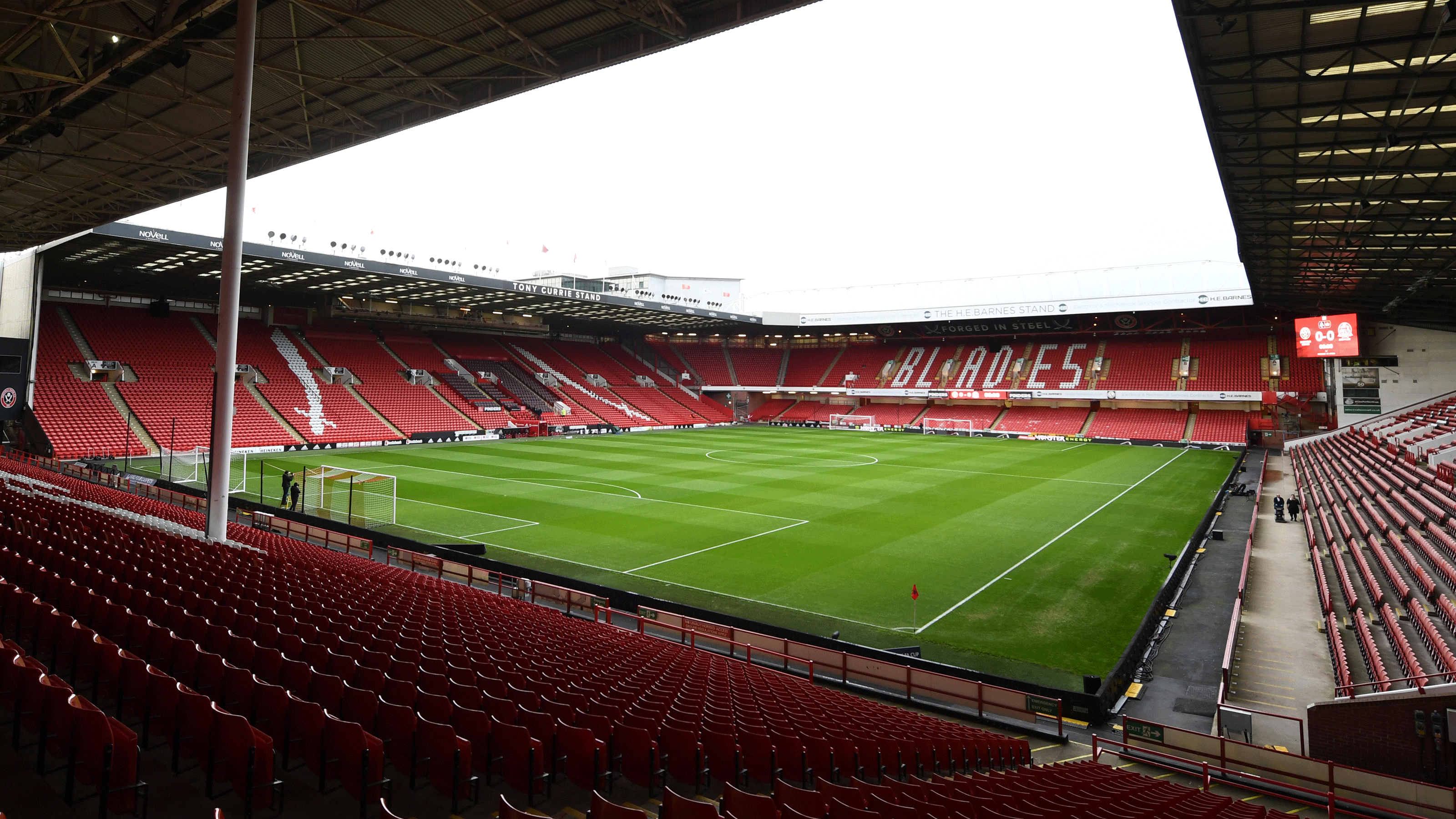
Bramall Lane opened in 1855. Let that land for a moment. Not 1955. Not 1905. Eighteen fifty-five — before the Football League existed, before the FA Cup, before most of the clubs you've ever watched had even been formed. There is no older major football ground still in use anywhere in the world, and the fact that it sits in a tight residential pocket of south Sheffield, hosting Championship or Premier League football depending on the season, is one of the genuinely remarkable things about English football. Groundhoppers come here for the history. They stay because the place still has teeth.
Where They Come From
Sheffield is a steel city — or was, before the industry hollowed out and left the hills and the terraced streets behind. United are the south side of the city's great divide, the working-class counterweight to Wednesday's Hillsborough across town, though the geography of allegiance is never quite as clean as outsiders imagine. What matters is that this is a club with deep roots in a city that takes its football seriously and doesn't much care for pretension. The Blades have yo-yoed between the top flight and the Championship with exhausting regularity in recent decades, but the identity never wavers. Sheffield United are Sheffield United, and Bramall Lane is the proof of it.
Four Sides
The ground is compact and asymmetric in the way that only genuinely old grounds can be — not the manufactured quirkiness of a modern retro-build, but the real thing, shaped by streets and history and money spent when it was available. The South Stand is the largest and most modern, a two-tiered structure that dominates that end of the ground. The Kop at the north end is the spiritual home of the noisiest support, a covered single-tier stand that generates a wall of sound when United are going forward. The John Street Stand along the side is older, lower, and carries the weight of the ground's Victorian bones in its bones. The Bramall Lane Stand opposite — named for the road itself — completes the rectangle. Floodlights rise on old-fashioned pylons at the corners, exactly as they should. The pitch is tight to the stands, the sight lines are good, and the whole thing feels like a ground that has been lived in rather than installed. Which, of course, it has.
Away Day Reality
Away supporters are housed in a section of the South Stand, which means seats rather than terracing and a decent elevated view of the pitch. It's not the most atmospheric away end you'll visit — the separation from the home support and the modern construction of the stand work against it — but the view is fine, the facilities are functional, and you won't feel like an afterthought. The home support in the Kop can be genuinely intimidating when the ground is full and the Blades are up for it, which is worth knowing if you're in away colours and the match matters. Expect noise. Expect passion. Expect to be reminded that you are a guest.
The Walk In
Sheffield station is about a mile away, and the walk is straightforward — down Shoreham Street and you're essentially there, the floodlight pylons visible well before you arrive. It takes around fifteen minutes at a comfortable pace and takes you through the kind of urban Sheffield that hasn't been gentrified into anonymity yet. If you're on the tram, the Granville Road or Park Grange Croft stops on the Supertram network put you about ten minutes from the ground on foot. Buses stop almost at the gate — the Bramall Lane/John Street stop is a two-minute walk. Street parking exists in the surrounding residential streets but fills quickly; the walk from the city centre is genuinely the better option.
Their Story
Sheffield United were founded in 1889 — thirty-four years after the ground they play in — and were a top-flight club for much of the twentieth century's first half, winning the First Division title in 1898 and reaching multiple FA Cup finals. The modern era has been defined by oscillation: relegation from the Premier League in 2007, a long rebuild under Dave Bassett's successors, a remarkable promotion under Chris Wilder in 2019 that took them back to the top flight for the first time in twelve years, followed by a season of genuine overachievement, then a collapse, then another promotion, then another relegation. Wilder's first spell in charge is the chapter supporters will tell their grandchildren about — a team built on overlapping centre-backs and collective belief that finished ninth in the Premier League and made the whole country take notice. The arc bends back down again, as it always does, but the story isn't finished.
Before and After
The area around Bramall Lane has a decent spread of options within easy walking distance. A few worth knowing about:
- Triple Point Brewery + Bar (178 Shoreham St, Sheffield City Centre) — a well-regarded independent brewery bar on the walk in from the station, rated highly and worth a stop for something other than the usual matchday lager.
- The Beer Engine (17 Cemetery Rd, Highfield) — a proper pub with a good reputation, a short walk from the ground.
- Rutland Arms (86 Brown St, Sheffield City Centre) — a reliable city-centre option on the way in, well-rated and close enough to the ground to be convenient.
- Sidney & Matilda (Rivelin Works, 46 Sidney St, Sheffield City Centre) — a well-regarded bar in a converted industrial space, the kind of place Sheffield does well.
- Sheaf View (25 Gleadless Rd, Heeley) — slightly further out but a proper local pub with a strong reputation among those who know the area.
- Panenka Bar & Grill (New Era Square, Highfield) — a football-themed bar and grill practically on the doorstep, which tells you everything you need to know about its matchday clientele.
Note that away-friendly status for all of these is unconfirmed — use your judgement on derby days and big fixtures, and if in doubt, the city centre options give you more anonymity. Inside the ground, the pies are standard Football League fare — adequate, warm, overpriced in the way all matchday pies are overpriced. The programme is worth picking up if you're groundhopping; at a ground this old, the history section alone earns its keep. The Kop, when it's going, is the reason you came.
Track every ground you visit
Log your visits, discover new grounds nearby, and see your groundcount grow.
| Download on the App Store | Get it on Google Play |