St James' Park — Newcastle United
St James' Park sits on a hill above the city like it owns the place — because it does. One of English football's great cathedrals, and worth every mile of the journey.
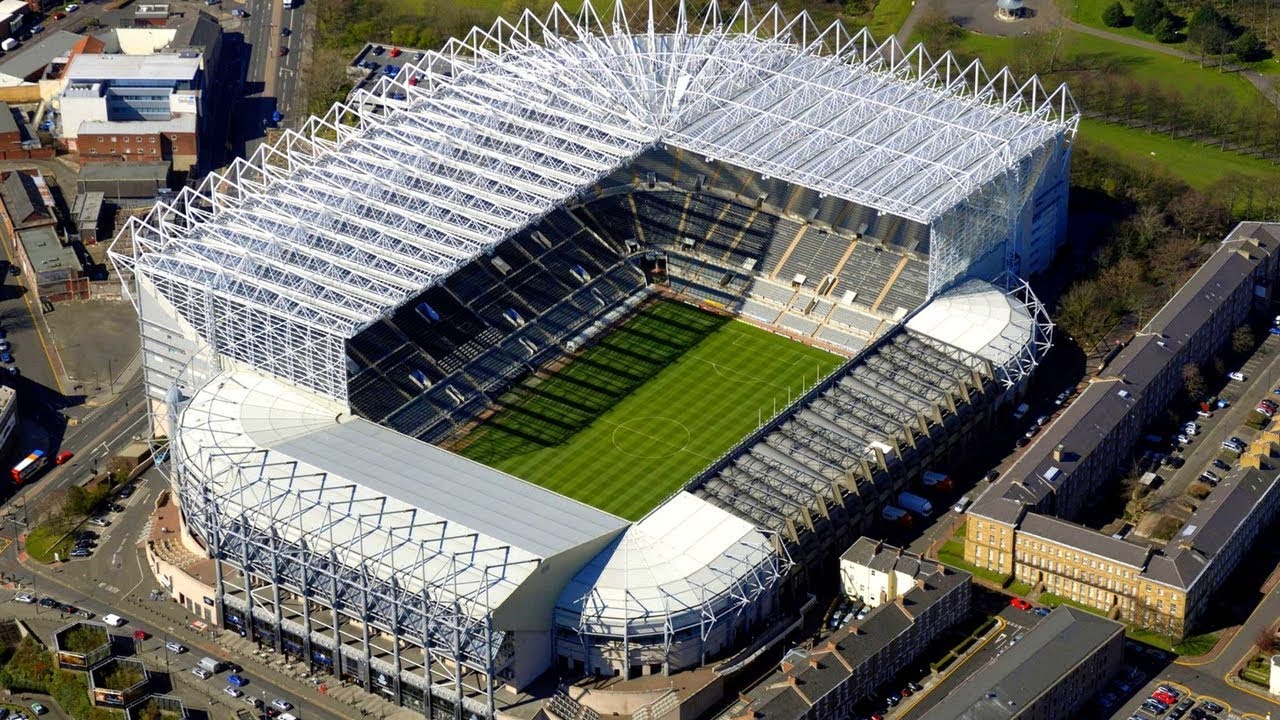
There are grounds you visit and grounds you make a pilgrimage to. St James' Park is the latter. It sits on a ridge above Newcastle city centre, visible from half the city, and it announces itself with a kind of unapologetic confidence that most modern arenas spend millions trying to manufacture and never quite manage. Over 52,000 seats, a support that treats football as a civic religion, and a noise level on a big matchday that you feel in your chest before you've even found your seat. This is one of the reasons you do this.
Where They Come From
Newcastle United and this city are inseparable in a way that goes beyond the usual club-and-town relationship. This is a post-industrial city on the north-east coast that has always had to fight for its identity — against London's indifference, against economic decline, against the assumption that nothing important happens this far north. The club carries all of that. The black and white stripes are not just a kit; they are a statement of belonging. Sunderland is forty minutes down the road and the rivalry is fierce, but Newcastle's identity is not defined by what it's against — it's defined by what it is. Tyneside. The Toon. A city that turns out in extraordinary numbers for a club that has, for long stretches, given it very little back.
First Impressions
The approach up Barrack Road or from the Gallowgate end gives you the full picture: this is a ground that has grown upwards rather than outwards, hemmed in on all sides by the city. The two dominant structures are the Sir John Hall Stand (the old Leazes End, rebuilt into something vast and steep) and the Milburn Stand along the west side, named after Jackie Milburn and carrying the weight of that name with some dignity. The East Stand and the Gallowgate End complete the bowl, and when it's full — properly full — the noise bounces around in a way that a flat, open ground simply cannot replicate. The floodlight pylons are old-school and tall, visible from the city below, and they give the place a silhouette that no modern LED ring could replace. Inside, the upper tiers are steep enough to make you grip the handrail. The sight lines are excellent almost everywhere. It is, for all its size, a proper football ground.
Away Day Reality
Away fans are housed in a section of the Sir John Hall Stand, in the upper tier at the Leazes End corner. It is, to be honest, a mixed experience. The view is fine — you're high up and you can see the whole pitch clearly — but the allocation is often modest relative to the size of the ground, and the steep rake means the concourses feel cramped when it's busy. The home support is loud and close, which is either thrilling or oppressive depending on how the match is going. Newcastle fans are not, in general, hostile to away supporters in the way some grounds can be — there's a confidence here that doesn't need to express itself through nastiness. But make no mistake: if you're in away colours and your side is winning, you'll know about it. Bring your voice. You'll need it.
The Walk In
This is one of the easiest big grounds in England to reach without a car, and that is a genuine pleasure. The St James' Metro station on the Tyne and Wear Metro is about three minutes' walk from the turnstiles — you come up the escalator and the ground is right there, looming over you. Haymarket and Monument stations are both around seven or eight minutes on foot if you're coming from the city centre or arriving at Newcastle Central mainline station. Central is about a fifteen-minute walk or a quick Metro hop. The walk up from the city centre through Grainger Town is worth doing at least once — past the covered market, up through the Georgian streets, the ground getting bigger as you climb. Street parking near the ground is limited and not worth the stress. The Metro is the answer.
The Arc
The story of Newcastle United is one of English football's great tragedies, told in instalments over several decades. The Kevin Keegan years in the mid-1990s — the Entertainers, the title race of 1995–96, the five-nil at Manchester United — gave this city a taste of something extraordinary, and the fall from that peak has been long and painful. Sir Bobby Robson's tenure offered a brief, warm reprieve. Then came the Mike Ashley era: years of mismanagement, relegations, near-misses, and a support that kept turning up in their tens of thousands despite having every reason not to. The Saudi-led takeover in 2021 changed the equation again, and the club's rapid return to European football under Eddie Howe felt, to those who had watched the lean years, almost surreal. The history here is not just about trophies — it's about what a city endures for its club, and what that says about both of them.
The Full Day Out
Newcastle city centre is genuinely one of the better matchday cities in England — there's enough going on within walking distance of the ground to fill a full afternoon. The pubs near the ground are plentiful, though since all away-friendly status is unconfirmed here, it's worth using your judgement and reading the room before settling in anywhere in black and white:
- St. James' STACK (Gallowgate, NE1 4SG) — a street food and bar container village right next to the ground, rated highly and worth a look for a pre-match drink and something to eat.
- The Botanist Newcastle (Monument Mall, NE1 7AL) — a well-regarded bar in the city centre, about a ten-minute walk from the ground, good for arriving early and settling in.
- Old George Inn (Old George Yard, NE1 1EZ) — one of Newcastle's older pubs, tucked away off the Bigg Market, with a decent rating and a bit more character than the chain bars.
- The Mile Castle (Grainger St, NE1 5JE) — a Wetherspoons on Grainger Street, which means cheap pints and no frills; useful if you're watching the budget.
- Katie O'Brien's Irish Tavern (Collingwood St, NE1 1JF) — on the Collingwood Street strip, which is a reliable stretch for a pre-match pint in the city centre.
Inside the ground, the concourse food is what you'd expect at a Premier League venue — functional, expensive, and not the reason you came. The programme is worth picking up if you're a collector. The real reason to be inside early is the noise: when the Gallowgate End gets going before kick-off, it sets the tone for everything that follows, and you want to be in your seat for it.
Track every ground you visit
Log your visits, discover new grounds nearby, and see your groundcount grow.
| Download on the App Store | Get it on Google Play |