Stadium of Light — Sunderland AFC
Built on the bones of Wearmouth Colliery, the Stadium of Light is a 49,000-capacity ground that still carries the weight of a city that lives and breathes football.
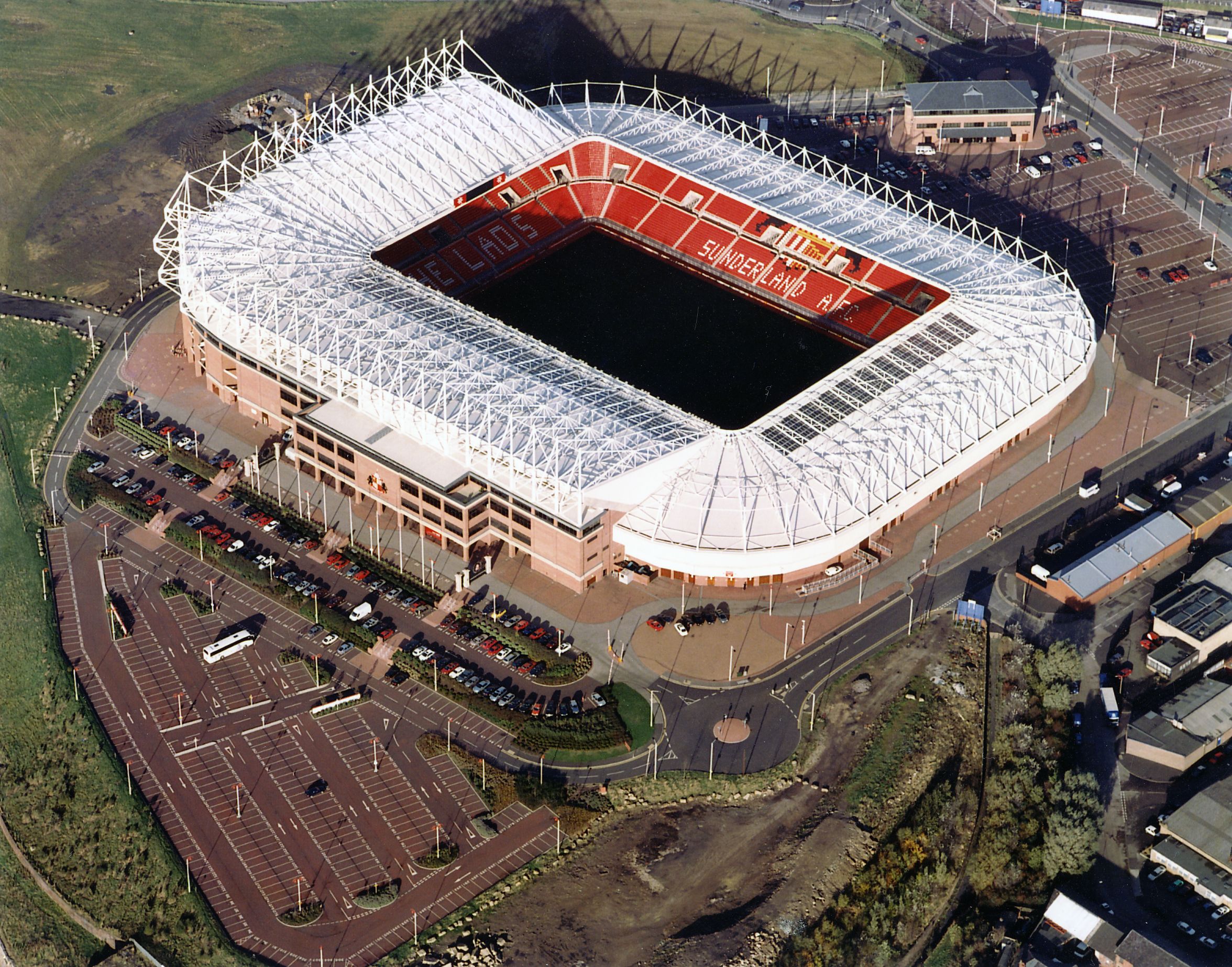
There are big grounds and there are grounds that feel big in a different way — not just in capacity, but in what they carry. The Stadium of Light is the latter. Forty-nine thousand seats on the north bank of the Wear, built where miners once clocked on, and on a full house it generates a noise that gets into your chest and stays there. For a groundhopper, this is one of the essential trips in English football — not because of the architecture, but because of what happens inside it when Sunderland are up and the Black Cats end is in full voice.
Where They Come From
Sunderland is a city that has taken its share of blows — deindustrialisation, economic decline, the slow erosion of the things that once defined it — and football has absorbed all of it. This is not a club that exists alongside its city; it is woven into it in a way that very few clubs in England still are. The Wearside identity is distinct from Tyneside, and don't let anyone tell you otherwise. The rivalry with Newcastle United is one of the most fiercely felt in the country, and it runs deeper than football. It runs through family, through work, through the whole idea of who you are and where you're from. Sunderland AFC is the expression of a city that refuses to be an afterthought.
First Impressions
The ground sits on Millennium Way in Monkwearmouth, right on the riverbank, and the approach from St Peter's Metro station takes you past the National Glass Centre and along the Wear — it's a genuinely good walk in, with the floodlight towers rising ahead of you and the scale of the place becoming clear before you've even reached the turnstiles. The Stadium of Light opened in 1997, replacing Roker Park, and it was built in phases — the North Stand came later, completing the bowl and pushing capacity up towards 49,000. The modern uprights on the roof give it a clean, purposeful look rather than the old pylon charm of somewhere like Roots Hall, but the sheer enclosed mass of the place compensates. Inside, the lower tiers are steep and close to the pitch, which matters enormously for atmosphere. The pitch itself — 105 by 69 metres of grass — sits in a natural bowl effect that traps sound. On a big night, that matters more than any architectural flourish. A bronze statue of Bob Stokoe, arms outstretched in that famous Wembley sprint, greets you outside. If you know, you know.
Away Day Reality
Away supporters are housed in the North Stand upper tier, and the honest truth is it's a mixed experience. The view is fine — you're high up, the sight lines are clear, and you can see the whole pitch without obstruction. But you're a long way from the action, and the separation from the home support means the atmosphere around you can feel thin unless your club has brought a decent following. The concourses are functional rather than welcoming, and the away end doesn't generate much noise of its own unless the match gives it reason to. That said, Sunderland supporters are generally respectful of travelling fans — hostile when the occasion demands it, but not unpleasant. Bring your voice and make the most of the view.
The Journey In
The Tyne and Wear Metro is the only sensible way to arrive. There is a dedicated Stadium of Light Metro station right outside the ground — six or seven minutes' walk — but St Peter's station is equally close and slightly less chaotic post-match if you want to get away sharpish. From Newcastle Central, you're looking at around 25 minutes on the Metro, which makes this one of the more straightforward away days in the Championship or wherever Sunderland happen to be playing. If you're driving, parking near the ground is limited and the surrounding roads get snarled quickly — the Metro really is the answer. The walk from St Peter's along the riverbank is worth doing at least once; it gives you a proper sense of where the ground sits in relation to the city.
The Arc
The story of Sunderland AFC in the last two decades is one of the more dramatic in English football — and not always in the way the club would have chosen. Six consecutive top-half Premier League finishes in the 2000s under Peter Reid gave way to a cycle of relegation battles, brief recoveries, and then the catastrophic back-to-back relegations of 2017 and 2018 that sent them tumbling into League One. The Netflix documentary series that followed — raw, uncomfortable, and compulsive viewing — introduced a new generation to a club in freefall. What came next was the slow, painful rebuild: new ownership, a return to the Championship in 2022, and the gradual sense that the sleeping giant might actually be waking up. The ground never stopped being too big for the league they were in. Now, at least, the league is starting to catch up with the ground again.
Before and After
There are plenty of options in the area, though the away-friendly status of most is genuinely unknown — so use your judgement, especially on derby days or high-tension fixtures.
- The Colliery Tavern (12 Southwick Rd, Monkwearmouth) — the closest pub to the ground, just a couple of minutes' walk, and the name alone tells you something about the neighbourhood's roots.
- The Wheatsheaf (207 Roker Ave, Monkwearmouth) — a short walk towards Roker, well-rated and worth a look if you're arriving early.
- The Saltgrass (Ayres Quay, Hanover Pl) — down by the quayside, a solid option with a good Google rating and a bit of atmosphere from the waterfront setting.
- Websters Ropery (Ropery Rd) — one of the highest-rated boozers in the area, a bit further out but worth the detour if you're making a day of it.
- The Ship Isis (26 Silksworth Row) — the best-rated pub on this list, tucked into the town centre end of things; good for a pre-match pint if you're coming in from the city side.
- The Dun Cow (9 High St W) — a proper Sunderland pub on the High Street, well-regarded and central enough to make it a natural gathering point.
- Mexico 70 (312 High St W) — a bar with a strong reputation and a name that any football fan can appreciate; worth a visit if you're in the mood for something a bit livelier.
- The Keel Tavern (Keel Square) — on the regenerated Keel Square development, highly rated and a good shout if you want something a bit more modern before the match.
Inside the ground, the catering is what you'd expect from a large Championship or Premier League venue — pies are passable, the queues at half-time are long, and the programme is worth picking up for the history alone. The real reason to be here is the noise when the home end gets going. Find your seat early, look around at the scale of the place, and remember that this ground was built on a colliery. That's not a metaphor — it's just the truth, and it matters.
Track every ground you visit
Log your visits, discover new grounds nearby, and see your groundcount grow.
| Download on the App Store | Get it on Google Play |