Wembley Stadium — England / FA Cup Finals & Major Events
Ninety thousand seats, one arch you can see from half of London, and a walk up Olympic Way that still does something to you. There's nowhere else quite like it.
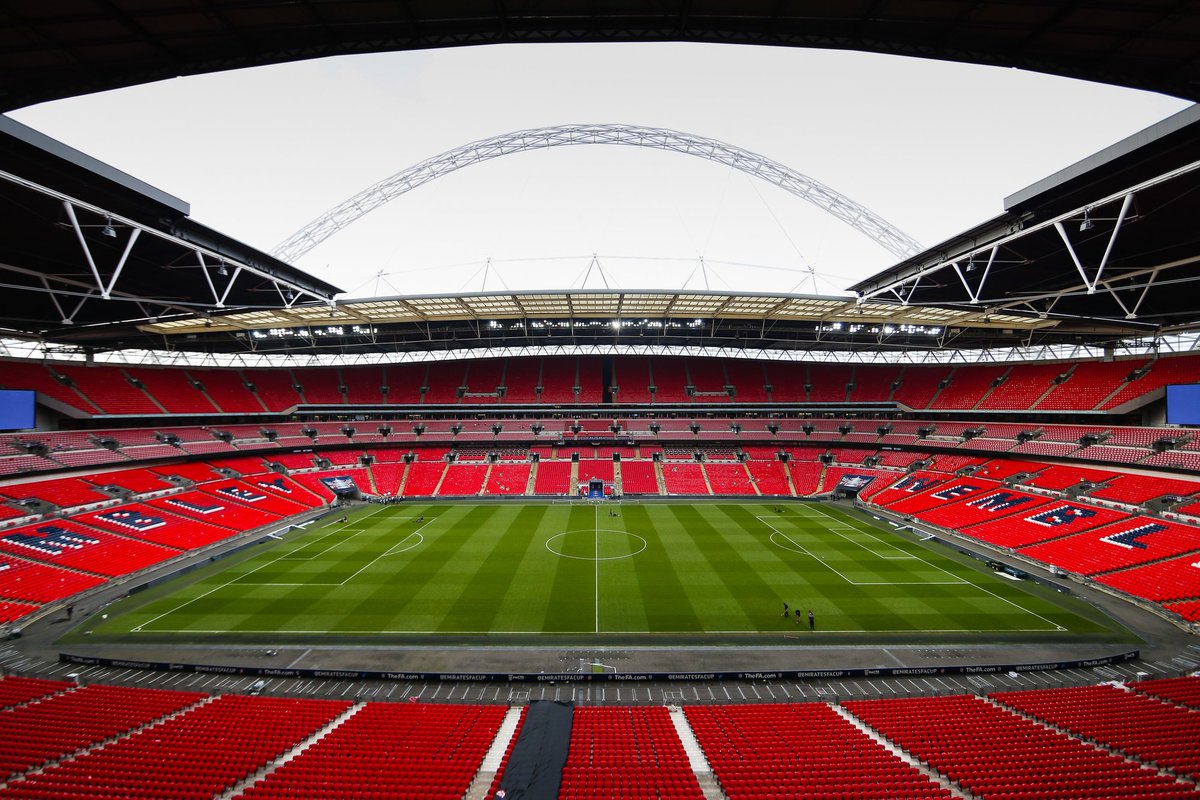
There are grounds you visit for the club, and then there is Wembley — a place you visit for the occasion. That distinction matters. A groundhopper who has squeezed into a 400-capacity non-league end on a wet Wednesday in February knows the difference between atmosphere that grows from a community and atmosphere that is manufactured at scale. Wembley does the latter better than anywhere on earth, and on the right day, with the right fixture, it earns every one of its 90,000 seats. The argument for making the trip is simple: whatever you think of the modern game, there are still moments here that remind you why football matters.
The Place That Made Them
Wembley is north-west London — HA9, the shadow of the arch falling across a borough that is one of the most diverse in the country. This is not a football town in the traditional sense; there is no single club whose identity is inseparable from these streets the way there might be in Burnley or Grimsby. Instead, Wembley the place has become synonymous with Wembley the idea — the destination, the final, the occasion. The local club, Wembley FC, play their football several rungs below in non-league, which gives you a sense of the strange duality of this postcode: the biggest ground in England sits in a neighbourhood where grassroots football quietly gets on with it. That tension is part of what makes the area interesting.
First Impressions
The current ground opened in 2007, replacing the twin towers with a single arch that rises 133 metres above the pitch and has become one of the most recognisable structures in world sport. You can see it from the North Circular. You can see it from parts of central London on a clear day. Up close, the scale is genuinely disorienting — the bowl is vast, the concourses wide enough to feel like airport terminals, the upper tiers steep enough to make you grip the handrail. The roof covers every seat, which means the noise, when it comes, has nowhere to go but back down onto the pitch. The sight lines are good throughout; there is not a bad seat in the house in the technical sense, though the upper tiers at the ends can feel remote from the action. The floodlights are integrated into the roof structure rather than the old pylon style, which is efficient but loses something in character. What it gains is a clean, unobstructed view of that arch from inside — and on a floodlit evening, with the roof glowing, it is genuinely impressive.
For the Travelling Support
The away end at Wembley is a relative concept — for cup finals and play-off finals, both ends are allocated to supporters of the competing clubs, and the ground splits roughly down the middle. For England internationals, the away end is typically behind one goal in the lower tier, covered, with decent sight lines and reasonable legroom by the standards of a modern bowl. What you will not get is the tight, raucous intimacy of a proper away terrace — there is no terracing here, every supporter is seated, and the sheer size of the place means that even a vocal away following can feel swallowed by the surroundings. On a big cup tie, though, when your end is full and the occasion is right, the noise that bounces off that roof is something you will not forget in a hurry.
The Walk In
This is where Wembley earns its reputation. The walk up Olympic Way from Wembley Park tube station — twelve minutes on foot, down the wide boulevard with the arch growing larger with every step — is one of the great approaches in English football. It is not subtle. It is not tucked away down a terraced street. It is deliberately, almost aggressively theatrical, and it works. Wembley Stadium station on the Chiltern line is the closest rail option at around six minutes' walk, and Wembley Central on the Overground and Bakerloo line is about sixteen minutes. On matchday, every route converges on Olympic Way, and the crowd builds steadily from the moment you leave the station. Driving is possible but rarely advisable — parking is limited and expensive, and the tube and rail options are genuinely good. Get the train, walk the boulevard, look up at the arch. That is the correct way to arrive.
The Arc
The original Wembley, opened in 1923 for the British Empire Exhibition and immediately pressed into service for the FA Cup Final — the so-called White Horse Final, when an estimated 200,000 people crammed in and a police horse named Billy helped clear the pitch — became the defining ground of English football for eight decades. It hosted the 1966 World Cup Final, European Cup Finals, the Twin Towers becoming as iconic as any structure in the sport. By the late 1990s it was crumbling, the facilities embarrassing by modern standards, and the decision to demolish and rebuild was painful but inevitable. The new ground took years longer and cost far more than planned, the twin towers replaced by the arch in a move that divided opinion sharply. What emerged in 2007 was a ground that has gradually, grudgingly, won people over — not through nostalgia but through sheer quality of occasion. The play-off finals alone, five of them across the divisions on consecutive weekends each May, have given the new Wembley a mythology of its own.
The Full Day Out
The area around the ground has been heavily developed in recent years, and there are plenty of options within a short walk, though the character is more retail park than proper football pub. The pubs and bars nearest the ground include:
- The White Horse, Wembley (4 Wembley Park Blvd, Wembley Park) — named in a nod to the famous 1923 Final, this is one of the more atmospheric pre-match options close to the ground, with a solid Google rating of 4.4.
- Feed the Yak Wembley Park! (51 Olympic Way, Wembley Park) — right on the approach boulevard, highly rated at 4.7, and well-placed for a drink as the crowds build on Olympic Way.
- BOXPARK Wembley (Olympic Way, Wembley Park) — the container-bar complex on Olympic Way is lively on matchday, with multiple food and drink options under one roof. Good for groups, gets busy early.
- The Parish Bar (120 Wembley Park Dr, Wembley Park) — slightly further from the main drag, rated 4.5, and worth knowing about if you want something a little less hectic than the Olympic Way scrum.
- The Wembley Tavern (121 Wembley Park Dr, Wembley Park) — a more traditional pub option on Wembley Park Drive, rated 4.1, and a reasonable fallback if the bigger venues are rammed.
- J.J. Moon's — JD Wetherspoon (397 High Rd, Wembley) — the 'Spoons on the High Road is the furthest of the options listed here but the most reliably cheap, at just under a kilometre from the ground. Rated 4.1, and you know exactly what you are getting.
- Stadium Sports Bar (125 Wembley Park Dr, Wembley Park) — does what it says, rated 4.0, and fine for a pre-match pint if you are in the area.
- Estadio Lounge (10 Wembley Park Blvd, Wembley Park) — rated 4.3, part of the newer development around the ground, and a decent enough option if you want something a bit more relaxed than the main pub strip.
Inside the ground, the concourse food and drink is what you would expect from a venue of this scale — functional, expensive, and served at speed. The pies are not the point here. The programme is worth picking up for a major final; for internationals, less so. What you are here for is the moment the teams walk out, the noise hits the roof, and 90,000 people remember simultaneously why they got into this in the first place. That part, Wembley still delivers.