MKM Stadium — Hull City
Hull's purpose-built ground has worn several names since 2002, but the football inside has always been worth the trip across the Humber.
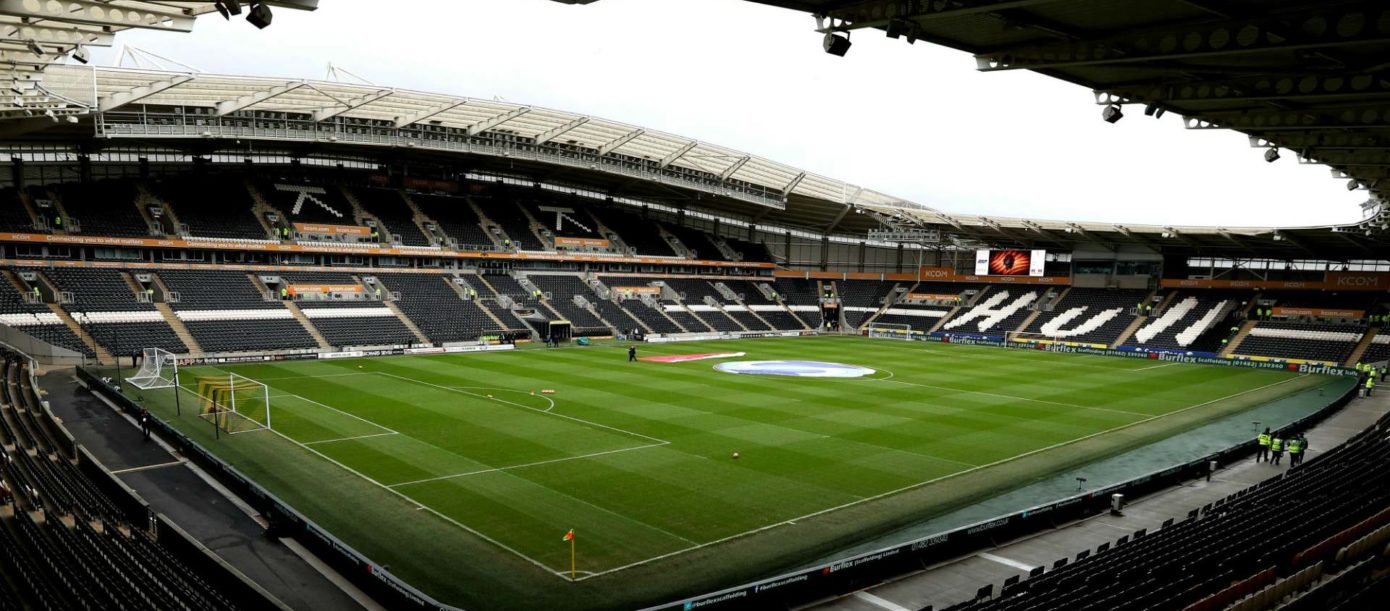
Hull City's ground is one of those places that divides groundhoppers cleanly down the middle. Some dismiss it as a soulless bowl, built to a template, lacking the creases and contradictions of a proper old ground. They're not entirely wrong — but they're missing the point. The MKM Stadium is a genuinely good football venue: compact enough to generate real noise, well-sighted from almost every seat, and sitting in a city that has earned its football the hard way. Come with an open mind and you'll leave with more than you expected.
Where They Come From
Hull is a city that has always felt slightly apart from the rest of England — geographically isolated on its peninsula between the Humber and the Hull, historically a port city that looked outward to Scandinavia and the Baltic rather than inward to Yorkshire. It's a city that has had to fight for recognition, and that spirit runs through the football club. Hull City exist in the shadow of no one locally, though they've spent much of their history in the shadow of their own potential. The rugby league clubs — Hull FC and Hull KR — dominate the sporting conversation in a way that would be unthinkable in most English cities, which makes City's moments of genuine football success feel all the more hard-won and precious to those who follow them.
First Impressions
The ground opened in 2002 and has gone through enough sponsor names to confuse even regular visitors — KC Stadium, KCOM Stadium, and now the MKM Stadium, though you'll hear all three used interchangeably depending on who you're talking to and how long they've been going. Whatever you call it, the structure itself is consistent: four roughly equal stands arranged in a tight oval, with a roof that runs continuously around the ground and does a decent job of keeping the noise in. The East Stand and West Stand are the main seated tiers, both with good upper sections that give you an excellent elevated view of the pitch. The North Stand is the home end, and when City are doing well and it's packed, it generates a wall of sound that the roof amplifies rather than swallows. The floodlights are integrated into the roof structure rather than standing as separate pylons, which gives the ground a clean, modern silhouette — functional rather than characterful, but it works. The pitch itself is a good size and the sight lines from the lower tiers are better than you'd expect from a ground of this type.
Away Day Reality
Away supporters are housed in the South Stand, which is a covered, seated end with a decent allocation when the fixture demands it. The view is good — you're not tucked behind a pillar or staring at a supporting column — and the acoustics mean a vocal away following can make themselves heard. It's not the most atmospheric away end you'll ever stand in, and the seating-only format takes some of the edge off, but it's honest and functional. Hull fans are generally fine with away supporters — this isn't a ground where you'll feel unwelcome walking in away colours, and the stewarding is usually sensible rather than heavy-handed. If you're travelling in numbers and you're up for it, the South Stand can be a decent place to watch a match.
The Walk In
Hull Paragon station is about a nineteen-minute walk to the ground, heading west along Anlaby Road. It's a straightforward route — you won't get lost — and the walk takes you through a stretch of west Hull that tells you something real about the city: terraced streets, a few boarded-up shops, the odd takeaway doing brisk pre-match trade. It's not a picturesque approach, but it's an honest one. Buses run along Anlaby Road and stop close to the ground if you'd rather not walk. If you're driving, there's parking around the ground and in nearby streets, though it fills up quickly for bigger fixtures. The Humber Bridge is a genuinely impressive arrival if you're coming from the south — worth the toll just for the view.
The Arc
Hull City's story is one of the more dramatic in recent English football. For most of their existence they were a lower-league club going nowhere in particular, rattling around Boothferry Park — a ground that had its own rough charm but was crumbling by the time they left it. The move to the new ground in 2002 coincided with a period of genuine ambition, and under Phil Brown they reached the Premier League for the first time in 2008, a moment that felt almost surreal for supporters who had spent decades watching their club drift. The FA Cup final in 2014 — when they led Manchester City 2-0 before losing in extra time — remains the high-water mark, a day that still hurts in the way only football can hurt. Since then it's been a cycle of relegations and promotions, the Championship their natural habitat for now, but the memory of what this club briefly was keeps the expectation alive.
Pubs, Pies & Matchday
Anlaby Road and the surrounding streets have a reasonable spread of options before a match, and Princes Avenue — a ten-minute walk north — has a livelier bar scene worth exploring if you arrive early enough. Since away-friendly status is unconfirmed for most of the nearby pubs, it's worth using your judgement on the day, particularly for derby fixtures:
- Parkers Anlaby Road (354 Anlaby Rd, HU3 6NS) — a well-rated local on the main road into the ground, handy for a pre-match pint on the walk in.
- The Boot Room (35 Anlaby Rd, HU3 6NS) — close to the ground and football-focused by name; worth a look if you're passing.
- The New Griffin (501 Anlaby Rd, HU3 6EN) — further along Anlaby Road, solid rating and a straightforward boozer.
- The Halfway House (595 Spring Bank W, HU3 6LD) — well-rated local a short walk from the ground, worth considering if you want something a bit quieter.
- CHANTS CAFE BAR 45 (45 Chanterlands Ave, HU5 3SS) — one of the highest-rated options nearby; a café-bar feel rather than a traditional pub, but the rating speaks for itself.
- Clarendon Pub House (1-5 Londesborough St, HU3 1DS) — highly rated and a short walk from the ground; a proper pub worth seeking out.
- The Clarry (Londesborough St, HU3 1DS) — right next to the Clarendon and equally well-regarded; the two together make Londesborough Street a decent pre-match destination.
- Polar Bear Music Club (229 Spring Bank, HU3 1LR) — a music venue with a bar that pulls a mixed crowd; different atmosphere from the standard matchday pub.
- Old Zoological (6a Princes Ave, HU5 3QA) — on the Princes Avenue strip, which is worth the slight detour if you want more of a city-centre feel before the match.
Inside the ground, the catering is standard modern-stadium fare — pies are acceptable rather than memorable, the queues manageable if you time it right. The programme is worth picking up if you're a collector. The North Stand is where the noise comes from when City are in the mood, and on a good matchday — a promotion push, a local rivalry, a cup tie with something at stake — the MKM can be a genuinely loud place. It won't replace Boothferry Park in the memory of those who knew it, but it's a better ground than its critics give it credit for.
Track every ground you visit
Log your visits, discover new grounds nearby, and see your groundcount grow.
| Download on the App Store | Get it on Google Play |