Goodison Park — Everton FC
Goodison Park is one of English football's great grounds — a tight, towering Victorian bowl in the backstreets of Walton that rewards every away fan who makes the trip.
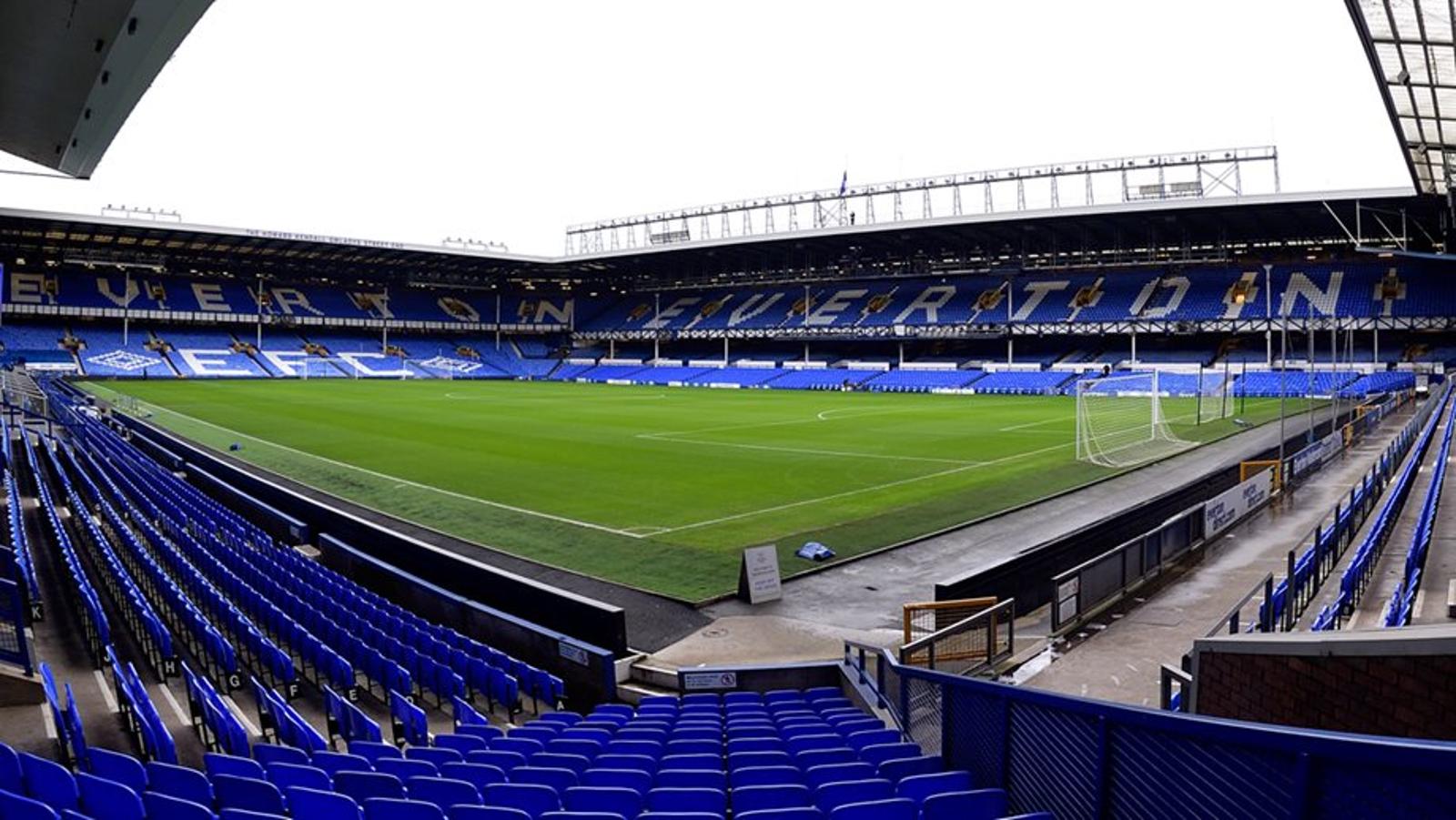
There are grounds you visit for the novelty, and there are grounds you visit because they are genuinely irreplaceable. Goodison Park is the latter. Opened in 1892 and still standing in the terraced streets of Walton, it is one of the last great Victorian football grounds in England — a proper, enclosed, four-sided bowl that wraps itself around the pitch and makes you feel the weight of everything that has happened here. Go before it's gone. Everton's move to their new ground at Bramley-Moore Dock is coming, and when it does, a piece of English football that cannot be rebuilt will disappear with it.
Where They Come From
Everton are a Liverpool club in the truest sense — not the global brand sense, but the Walton, Kirkdale, Anfield backstreets sense. The club was formed in 1878 and played at Anfield before a dispute with the landlord sent them across Stanley Park to Goodison Road, where they have been ever since. This is a working-class north Liverpool club, and the ground sits in the middle of a residential neighbourhood of terraced houses and corner shops that has barely changed in outline since the ground was built. The city has two clubs and always has had — but Everton's identity is rooted in a particular part of Liverpool, a particular kind of supporter, and a particular stubbornness about who they are. The People's Club, they call themselves. It is not an empty phrase here.
First Impressions
The approach along Goodison Road is one of the finest in English football. The ground rises up out of the terraced streets with almost no warning — suddenly there it is, the old Main Stand looming over you, red brick and white ironwork, looking exactly like what it is: a football ground that has been here since before your grandfather was born. The Bullens Road Stand opposite is a double-decker with a low, overhanging roof that traps noise like a drum. The Gwladys Street End — the home end, the loud end, the end that has generated more atmosphere than most grounds manage in a lifetime — is a covered terrace of seats that still feels like a terrace in everything but name. The Park End, where away supporters are housed, closes the rectangle at the Stanley Park side. The floodlight pylons are the old-fashioned four-corner type, tall and angular, and they look exactly right against the Liverpool sky. The pitch itself is tight — 100 by 68 yards — and the stands are close to it. You are never far from the action at Goodison. That is the point.
Away Day Reality
Away fans are allocated the Park End, which is a covered, all-seater stand behind the goal. The view is decent — you are close to the pitch and the sightlines are unobstructed — but the stand is relatively shallow and the atmosphere you generate there depends almost entirely on how many of you have made the trip and how much you care. On a big fixture, with a full away end behind you, it can be genuinely loud. On a quiet Tuesday with a half-empty allocation, it can feel a little exposed. The home support in the Gwladys Street End at the opposite end will let you know they are there. Everton fans are not hostile in the way some grounds can be — there is a certain pride in the place that tends to express itself as noise rather than nastiness — but they are passionate and they are loud, and if your side is winning, you will hear about it. Bring your voice.
The Walk In
Kirkdale is your best bet by train — it is on the Merseyrail Northern Line and puts you about thirteen minutes on foot from the ground, cutting through the residential streets north of the city centre. Bank Hall is another option at around eighteen minutes. If you are coming into Liverpool Central or Lime Street, the bus is often the more practical choice: stops on Bullens Road and Spellow Lane are practically at the turnstiles. Driving is possible but the surrounding streets are tight and residential parking is limited — most people who drive park further out and walk in. The walk from Kirkdale through the backstreets is worth doing at least once: it gives you the full effect of the ground appearing suddenly at the end of an ordinary street, which is one of the better arrival moments in English football.
The Arc
Everton were one of the founding members of the Football League in 1888 and spent the best part of a century as one of England's elite clubs — nine league titles, five FA Cups, and a UEFA Cup Winners' Cup in 1985 under Howard Kendall, the finest manager in the club's history. That mid-eighties side — Sharp-sponsored kits, Neville Southall in goal, Lineker and Gray up front — was genuinely one of the best in Europe. What followed was a long, slow drift: not catastrophic, not a single dramatic fall, just a gradual slide from the summit that has taken them from title contenders to relegation battlers over the course of three decades. The 2022–23 season brought them to the edge of the drop before a late escape. The points deductions, the ownership uncertainty, the years of managerial churn — it has been a difficult watch. But the move to Bramley-Moore Dock represents something: a genuine attempt to reset, to build something new without abandoning what the club is. Whether it works is another question. For now, Goodison remains, and it is still worth every mile of the journey.
Pubs, Pies & Matchday
The streets around Goodison are well stocked with local pubs, most of them proper neighbourhood boozers rather than anything polished. Away-friendly status at most of them is genuinely uncertain — this is a tight Everton community and colours matter — so use your judgement, particularly on derby days, and you will generally be fine if you are respectful about it.
- The Spellow (79 Goodison Rd, Liverpool L4 4EN) — practically on the doorstep of the ground, a classic local pub that fills up quickly before kick-off.
- The Brick (44 County Rd, Liverpool L4 3QL) — a short walk down County Road, well rated and a decent option if you want to get settled before the crowds arrive.
- Harlech Castle Pub (63 County Rd, Liverpool L4 3QD) — another County Road option, solid local with a good rating and close enough to make the walk to the ground easy.
- The Lion Liverpool (239 Walton Rd, Liverpool L4 4AR) — the highest-rated pub in the immediate area, worth the slightly longer walk up Walton Road.
- Segura (95 County Rd, Anfield, Liverpool L4 3QE) — a little further along County Road towards Anfield, well regarded and worth considering if the closer pubs are rammed.
- Leigh Arms (25 Barlow Ln, Liverpool L4 3QS) — tucked away on Barlow Lane, a quieter option if you want to avoid the main pre-match crush.
- The Barlow Arms (62 Barlow St, Liverpool L4 4NU) — one of the better-rated locals in the area, a bit further out but worth it if you want a proper drink before the match.
Inside the ground, the pies are what you would expect from a grand old ground that has never felt the need to impress anyone with its catering — functional, hot, and perfectly adequate. Pick up a programme: at a ground with this much history, it is worth having something to take home. And when the Gwladys Street End gets going — a proper, full-throated Merseyside roar on a cold afternoon — you will understand exactly why people have been making this trip for over a hundred years.
Track every ground you visit
Log your visits, discover new grounds nearby, and see your groundcount grow.
| Download on the App Store | Get it on Google Play |