Tottenham Hotspur Stadium — Tottenham Hotspur
Opened in 2019 on the bones of White Hart Lane, Spurs' ground is the most technically impressive in England — and one of the most debated among groundhoppers.
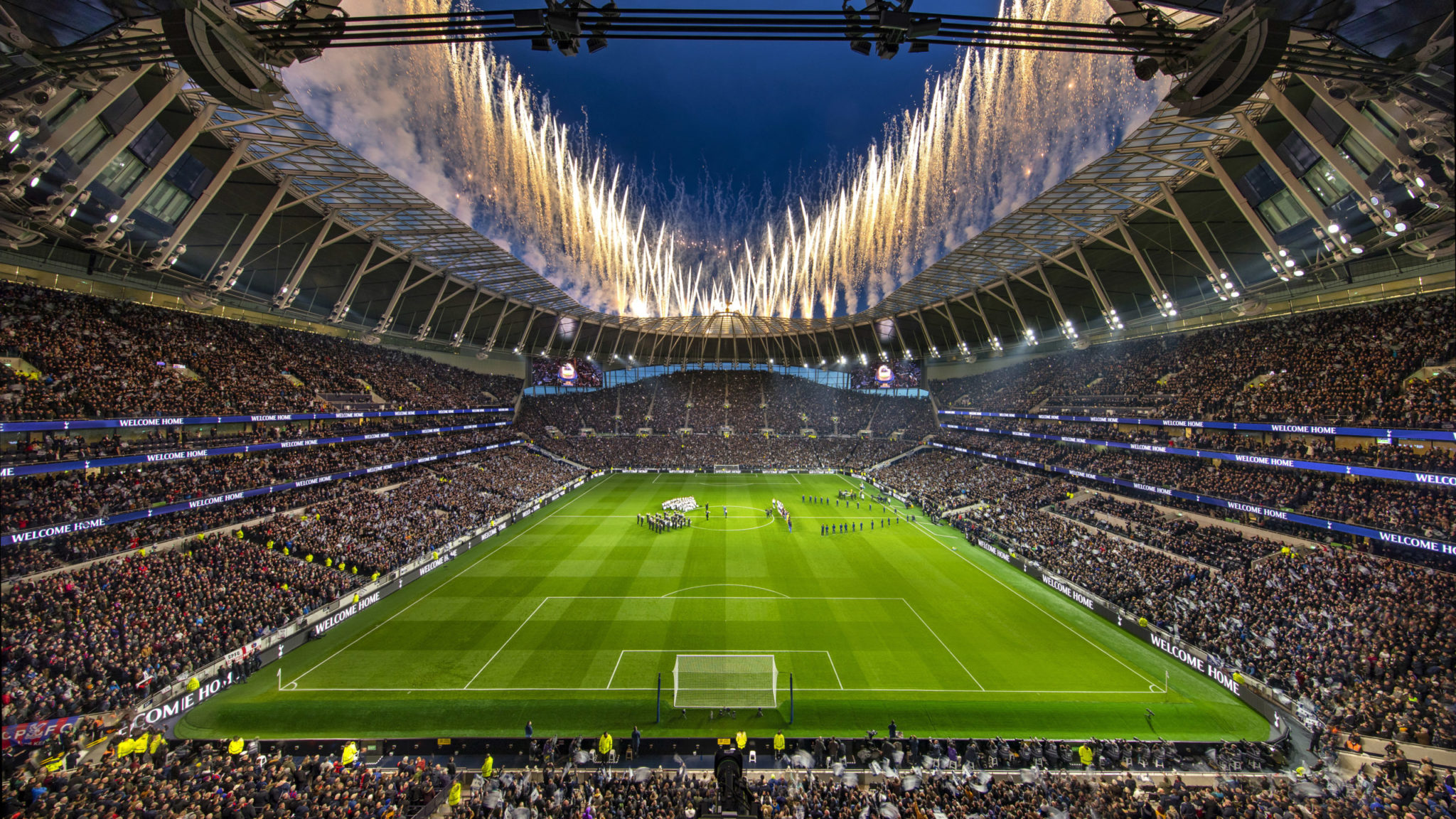
There are two ways to look at Tottenham Hotspur Stadium. One is that it is the finest purpose-built football ground in England — a 62,000-capacity colossus that does almost everything right, from the retractable pitch to the single-tier South Stand that generates a wall of noise you can feel in your chest. The other is that it is a monument to modern football's tendency to solve problems that didn't exist, built on a street where the old ground stood for over a century and where the soul of the club still lives in the terraced houses and chicken shops on the High Road. Both things are true. That tension is exactly what makes it worth the trip.
Where They Come From
Tottenham is not a glamorous postcode. N17 is Tottenham High Road, Bruce Grove, the Lea Valley — working north London, historically one of the most diverse and economically pressured parts of the capital. The club has always drawn from this community, and despite the gleaming new ground and the Premier League money, that identity hasn't entirely dissolved. Spurs exist in a city dominated by Arsenal to the north and Chelsea to the west, with West Ham pressing in from the east, and that perpetual sense of being the nearly-men of London football — brilliant at times, maddening at others — is baked into the support. The ground sits almost exactly where White Hart Lane stood, which matters more than it might seem. This isn't a club that moved to a retail park on the edge of town. They stayed.
First Impressions
Walking up from White Hart Lane Overground, the ground announces itself before you're ready for it. It rises above the surrounding streets with a confidence that borders on aggression — all dark steel and glass, the exterior clad in a kind of industrial aesthetic that nods, just about, to the area's character without being sentimental about it. The South Stand is the thing. A single-tier stand holding over 17,000 supporters, it is the largest in the country and on a full house it is genuinely ferocious — the kind of noise that makes you understand why clubs spend money on architecture. The rest of the bowl is steep and enclosed, with good sight lines from almost every seat. The floodlights are integrated into the roof rather than standing as pylons, which is cleaner but loses something of the old-school drama. Inside, the concourses are wide, well-lit, and feel more like an airport terminal than a football ground — which is either a selling point or a criticism depending on your disposition. The pitch itself is grass, laid in sections on a retractable system that slides beneath the South Stand when the NFL comes to town. It works. The surface is consistently excellent.
Away Day Reality
Away supporters are housed in the north-west corner of the ground, in a section of the lower and upper tiers that gives a reasonable view of the pitch without being the best seat in the house — which is about what you'd expect. It's covered, the sight lines are acceptable, and the acoustics mean you can make yourself heard if you've brought enough of you. The away allocation is not enormous relative to the ground's size, so for bigger clubs expect it to feel tight. Stewards are generally professional rather than antagonistic. The home support in the South Stand will drown you out on a good day, but that's not a complaint — it's what a proper home end should do. Bring your voice and don't expect to be comfortable. That's the deal.
The Walk In
White Hart Lane Overground is your best bet — seven minutes on foot, straight up the High Road, and the ground is impossible to miss. The Lea Valley lines run through here on the Weaver line, making it straightforward from Liverpool Street or Tottenham Hale. Northumberland Park station (Greater Anglia, about ten minutes' walk) is a useful alternative if you're coming from Stansted or the Lea Valley direction. The walk up the High Road is the best part of the approach — chicken shops, market stalls, the smell of food from the street vendors who set up on matchdays, the slow thickening of the crowd as you get closer. It feels like a football neighbourhood, which is increasingly rare. Driving is not recommended; parking is limited and the surrounding streets are heavily controlled on matchdays.
The Arc
Spurs' history is a story of brilliant peaks and long, frustrating plateaus. The 1960–61 Double under Bill Nicholson — the first of the twentieth century — remains the defining achievement, a side of genuine quality that played football the club's supporters still measure everything else against. There were FA Cups, UEFA Cup glory in 1972 and 1984, and a generation of players — Greaves, Hoddle, Gascoigne, Ginola — who made the club genuinely exciting to watch even when the trophies weren't coming. The move into the new ground coincided with a Champions League final in 2019, the closest the club has come to European glory in decades, and the years since have been the familiar Spurs mixture of promise, managerial upheaval, and near-misses. The ground is the most modern in England. The wait for a league title is now over sixty years. That gap between infrastructure and achievement is the central drama of supporting this club, and it isn't going away soon.
Pubs, Pies & Matchday
The High Road and surrounding streets have a decent spread of options, though away fans should be aware that none of the nearby pubs have confirmed away-friendly status — use your judgement, especially on derby days, and keep colours covered if you're unsure of the reception.
- The Bricklayers (803 High Rd, N17 8ER) — a well-rated local just a couple of minutes from the ground, worth a look if you arrive early.
- Corner Pin (732 High Rd, N17 0AG) — another High Road option, solid Google rating and close enough to make the walk to the ground easy.
- The Bill Nicholson (102 Northumberland Park, N17 0TS) — named after the greatest manager in the club's history, which tells you something about the clientele. Highly rated and close to Northumberland Park station.
- The Coach & Horses (862 High Rd, N17 0EY) — one of the better-rated pubs in the area, a short walk north of the ground.
- The Antwerp Arms (168-170 Church Rd, N17 8AS) — a community pub with a good reputation, slightly off the main drag and worth the short detour.
- Redemption Brew Co. & Match Day Taproom (Unit 16, Compass West Industrial Estate, West Rd, N17 0XL) — the standout option for anyone who wants something beyond a standard pint. An independent brewery with a matchday taproom and a 4.8 rating; get there early as it fills up.
- The Two Brewers (42 Scotland Grn, N17 9TT) — highly rated and a bit further out, good if you want to avoid the immediate matchday crush.
Inside the ground, the concourse food offer is extensive by English football standards — the ground has made a point of it, with a wider range than most. The pies are fine. The prices are Premier League. Pick up a programme if you can find one; the club still produces a proper matchday edition. The South Stand, when it's in full voice, is the reason to be here — find a seat anywhere in the lower bowl and you'll understand what the fuss is about.
Track every ground you visit
Log your visits, discover new grounds nearby, and see your groundcount grow.
| Download on the App Store | Get it on Google Play |