Riverside Stadium — Middlesbrough FC
A 34,000-capacity ground built on Teesside's industrial waterfront in 1995 — functional, proud, and unmistakably Boro. Worth the trip for the town alone.
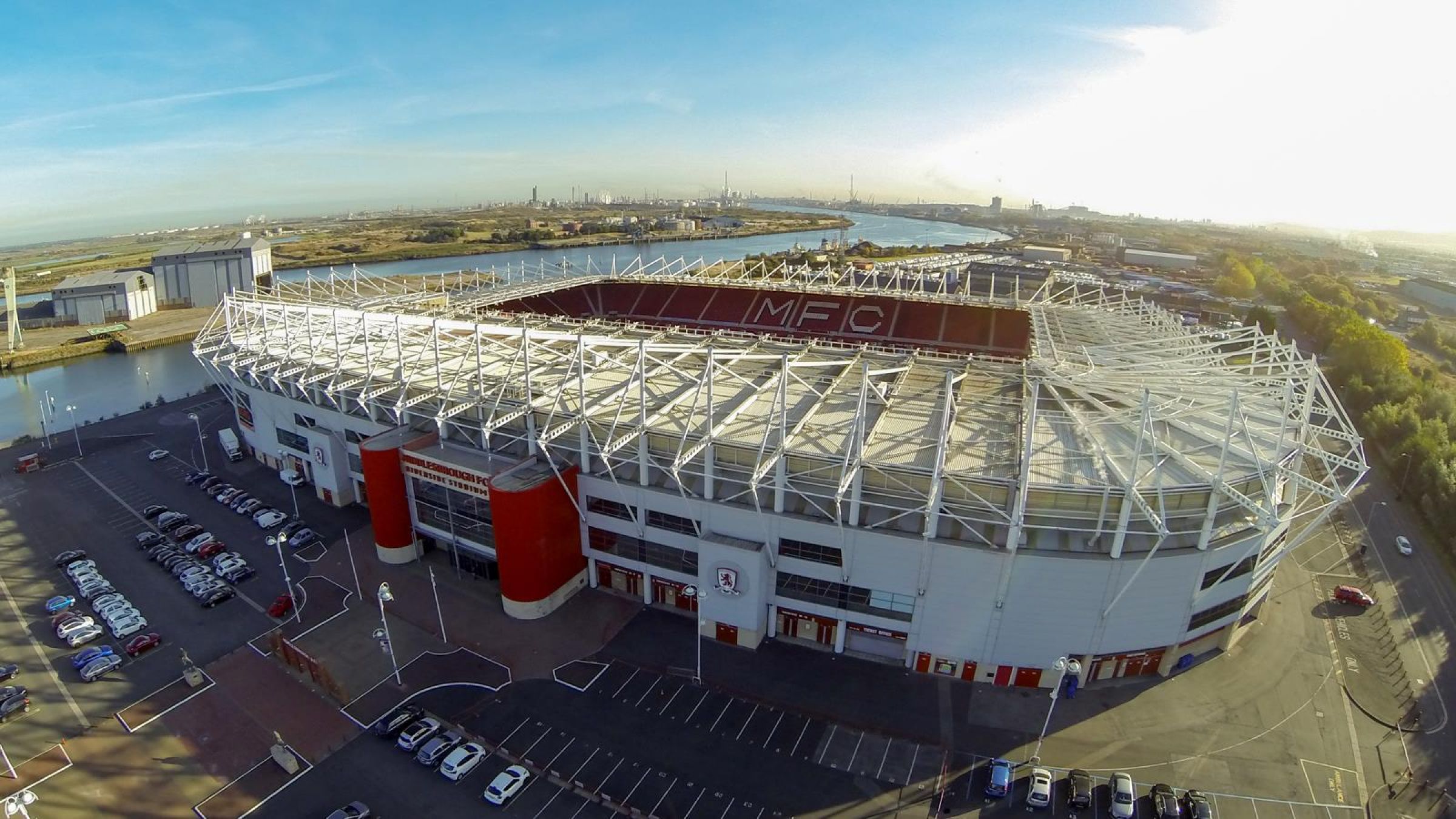
The Riverside is not a ground that tries to charm you. It doesn't have a Victorian grandstand or a terrace that's been there since the Edwardian era. What it has is something rarer in the modern game: a sense of place. Built on the old Middlehaven docklands in 1995, it sits on the south bank of the Tees with the transporter bridge visible in the distance and the smell of the river in the air on a cold Tuesday night. That's not nothing. That's Middlesbrough, and the ground knows exactly where it is.
Where They Come From
Middlesbrough is a town that has taken its share of knocks — deindustrialisation, economic decline, the usual story for a place built on steel and chemicals — and yet it has never lost its identity. The club is central to that. Boro are not a club that exists in spite of their town; they are their town, in the way that only certain clubs in the north of England manage to be. Surrounded by bigger cities — Newcastle to the north, Leeds to the south — Middlesbrough has always had to assert itself, and the football club has been the loudest part of that assertion. The Riverside sits in Middlehaven, a regeneration zone that has been regenerating for about thirty years, which tells you something about the pace of change on Teesside. But the ground is there, solid and purposeful, and on matchday the town empties towards it.
Four Sides
The Riverside is a proper bowl — four stands of roughly equal height, all-seater, enclosed at the corners, with a roof that keeps the noise in and the Teesside weather mostly out. The North Stand is the home end, the South Stand opposite, the East Stand to your left as you come in from Middlehaven Way. The West Stand — the main stand — runs the length of the pitch and houses the directors, the press, and the dugouts. Floodlights are mounted on the roof rather than on pylons, which gives the ground a clean, uncluttered silhouette against the Teesside sky. It's not a beautiful ground in the way that Roots Hall or Bootham Crescent were beautiful, but it has a coherence to it — everything faces inward, everything is focused on the pitch, and when it's full it generates a wall of noise that a half-empty bowl simply cannot replicate. The ground has gone through a few sponsor names over the years — the Cellnet Riverside, the BT Cellnet Riverside, even a brief flirtation with the Captain James Cook Stadium — but locals have always just called it the Riverside, and that's what it is.
Away Day Reality
Away fans are housed in the South Stand, which is a covered, seated end with a decent view of the pitch and reasonable legroom. It's not the most atmospheric away end in the Championship — the seats are fine, the sightlines are good, but there's a slight sense of distance from the action that a terrace would fix immediately. The home support in the North Stand can be loud when Boro are going well, and the noise does carry across the ground. You won't feel ignored, but you won't feel like you're in a cauldron either. Stewards are generally professional rather than officious. Bring a coat — the Teesside wind finds its way in regardless of the roof.
The Walk In
Middlesbrough train station is about fifteen minutes on foot from the ground, which is a perfectly manageable walk through the town centre and down towards the waterfront. Head east from the station, follow the signs for Middlehaven, and the ground appears ahead of you across the open dockland space — there's a moment where you come over a slight rise and the Riverside just sits there, square and purposeful against the sky, which is one of the better arrival moments at a 1990s ground. There's no great pub strip on the approach — the area around the ground is largely industrial and open — so sort your pre-match drink before you leave the town centre. Parking is available in the surrounding area but fills quickly; the walk from the station is genuinely the better option.
The Arc
Middlesbrough's story is one of the more dramatic in English football. They left Ayresome Park in 1995 — a ground that had hosted World Cup football in 1966 — and moved into the Riverside at the start of what turned out to be the most ambitious period in the club's history. Under Bryan Robson and then Steve McClaren, they signed Juninho, Ravanelli, Emerson, Boksic; they reached three League Cup finals in four years, finally winning in 2004; they got to a UEFA Cup final in 2006. Then the money ran out, the Premier League place went, and the long road back began. They've yo-yoed between the top flight and the Championship since, always feeling like a club that should be higher than they are, always carrying the weight of what they once were. That tension — between the ambition of the Robson era and the reality of life in the second tier — is what gives Boro their edge. They haven't given up. They just haven't quite got back yet.
Pubs, Pies & Matchday
The options immediately around the Riverside are limited, but there are a few worth knowing about near the ground itself.
- The Legends Lounge (Riverside Stadium, Middlehaven Way) — the club's own bar inside the ground, with a solid Google rating of 4.6; worth a look if you want to get straight into the matchday atmosphere.
- The Bridge Café Bar (Riverside Stadium) — also within the ground complex, a café bar option if you want something a bit more relaxed before kick-off.
- The Navigation (Navigation Inn, Marsh Rd., North Ormesby) — a short walk from the ground, well-rated at 4.6, and a proper local pub feel away from the stadium concourse.
- Six Medals (Heath Rd, North Ormesby) — another nearby option, rated 4.3, and the name alone suggests it knows its football.
- The Jovial Monk (Kings Rd, North Ormesby) — slightly further out at under a kilometre, rated 4.3, and a decent fallback if the closer options are rammed.
Inside the ground, the concourse food is standard Championship fare — pies are acceptable rather than memorable, the Bovril is hot and that's what matters in January. The programme is worth picking up if you're groundhopping; Boro put effort into theirs. The North Stand is where the noise comes from — if you're a neutral and you want to feel the match, position yourself somewhere you can hear it.
Track every ground you visit
Log your visits, discover new grounds nearby, and see your groundcount grow.
| Download on the App Store | Get it on Google Play |