Old Trafford — Manchester United
Over 76,000 seats, a dedicated train halt, and a nickname that divides opinion. Old Trafford is unlike anything else in English football — for better and worse.
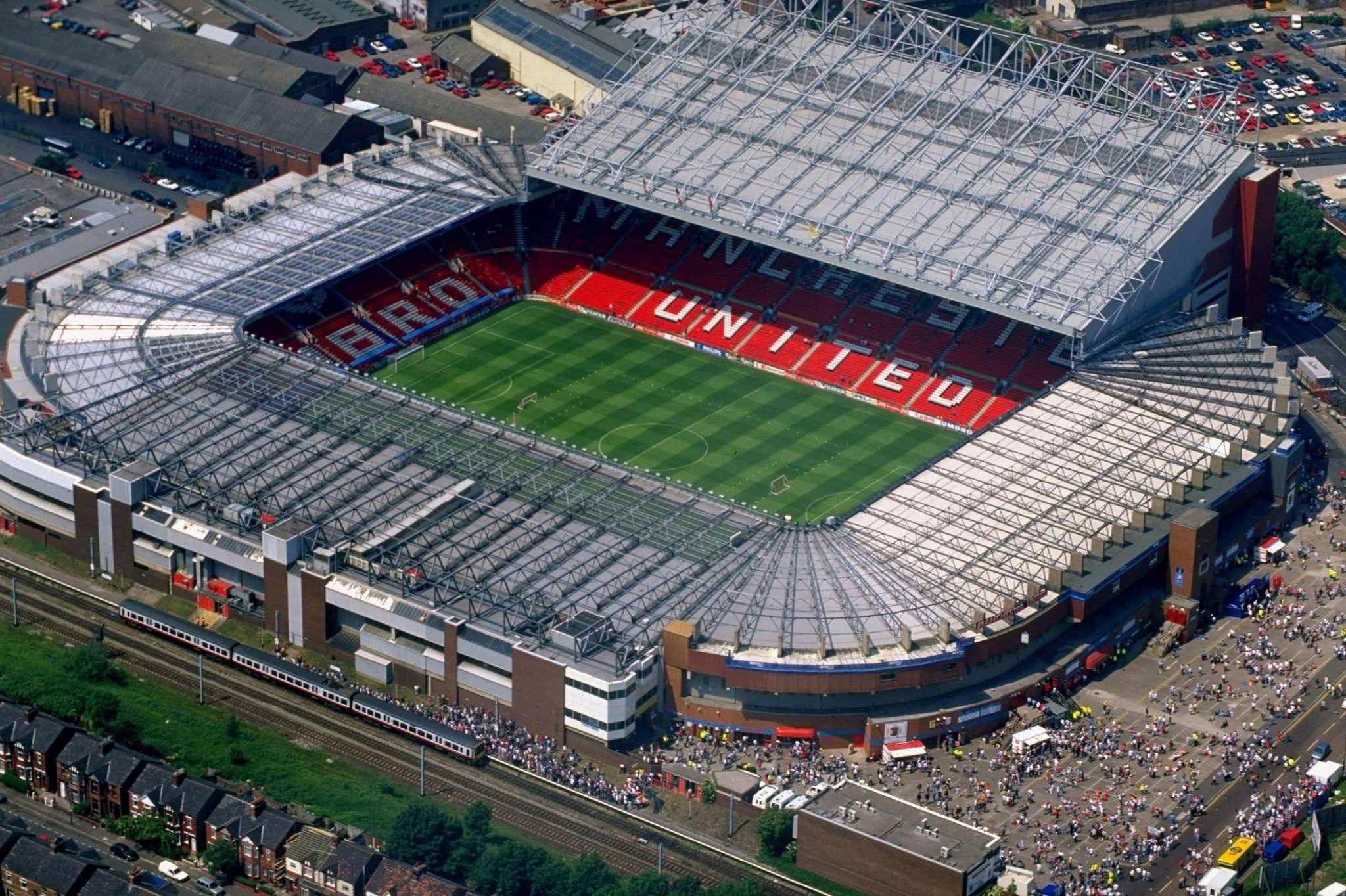
Old Trafford is the ground that every groundhopper ticks off and then spends years arguing about. It is enormous, it is loaded with history, and it is — depending on who you ask and which era you lived through — either the greatest football ground in England or a 76,000-seat monument to its own mythology. Both things can be true. What is not in dispute is that you have to go. Not because it will necessarily be the best matchday of your life, but because you cannot claim to have done English football without standing inside it at least once.
Where They Come From
Manchester United are not really a Manchester club in the way that City are — they belong to a broader, more diffuse idea of Manchester, one that stretches far beyond Stretford and the M16 postcode. The ground sits in the shadow of the cricket ground, a short walk from the Salford Quays development that has transformed this stretch of the Ship Canal into something almost unrecognisable from the industrial docklands it once was. The surrounding streets — Warwick Road, Chester Road, Sir Matt Busby Way itself — are still recognisably working-class in their bones, even as the club has grown into a global commercial operation. That tension between the local and the global, between the Stretford End faithful and the tourist in a replica kit bought at the megastore, is the defining characteristic of this place. It is a club that came from here but now belongs, in some sense, to everywhere.
Four Sides
The scale hits you before you get through the turnstile. The East Stand — the old main stand side — rises to a height that feels genuinely vertiginous when you are up in the upper tier. The Sir Bobby Charlton Stand (formerly the South Stand) runs along the pitch to your left as you come in from Sir Matt Busby Way, and the Sir Alex Ferguson Stand opposite is the newest and tallest, a three-tiered structure that looms over the north side of the pitch. Then there is the Stretford End — the West Stand — which is where the noise is supposed to come from, where the atmosphere is supposed to live. Whether it delivers on that reputation depends heavily on the fixture and the season. On a big European night it can be extraordinary. On a mid-table Premier League Saturday it can feel oddly muted for a ground of this size. The floodlights are modern uprights integrated into the roof structure rather than the old-school pylons, which is a shame aesthetically but does nothing to diminish the sight of the pitch under lights on a winter evening. The pitch itself — 105 by 68 metres, immaculate — is one of the finest playing surfaces in the country. The ground has been expanded and redeveloped so many times since it opened in 1910 that very little of the original fabric remains, but the sense of accumulated weight — of everything that has happened here — is real and present in a way that no amount of corporate hospitality can entirely smother.
Away Day Reality
Away fans are housed in a section of the Sir Bobby Charlton Stand at the eastern end of the south side, and the honest assessment is: it is fine. The view is decent, the seats are reasonable, and you are under cover. What you will not get is the kind of tight, enclosed, noise-amplifying away end that makes a Tuesday night at somewhere like Boundary Park feel electric. The allocation is relatively small given the overall capacity, and the away terrace — there is no standing here, it is all seated — can feel a little lost in the wider expanse of the ground. Home supporters in the adjacent areas are generally more curious than hostile; this is not a ground where away fans routinely get a hostile reception, though a derby is a different matter entirely. Bring your voice. You will need it to make yourself heard.
The Walk In
There is a dedicated railway halt — Manchester United FC station on the Metrolink-adjacent rail line — that is literally two minutes from the turnstiles, which tells you everything about the scale of the operation here. On matchday it runs services from Manchester Piccadilly and Oxford Road, and it is by far the easiest way in. The Wharfside Metrolink stop is about six minutes on foot, coming in from the Salford Quays direction past the Imperial War Museum North, which is worth a look if you are early. The walk down Sir Matt Busby Way from the station is one of the more theatrical approaches in English football — the statues of Busby, Best, Law and Charlton, the megastore, the crowds funnelling in — and whatever you think of the club, it is hard not to feel the weight of it. Street parking in the surrounding residential streets is possible but increasingly restricted on matchdays; the train is the sensible option.
The Arc
The story of Manchester United is so well-trodden that it risks feeling like wallpaper, but the arc of it is genuinely remarkable. Newton Heath, formed in 1878 by workers from the Lancashire and Yorkshire Railway, nearly went bankrupt in 1902 before being saved and renamed. The ground itself was bombed during the Second World War and United had to share Maine Road with City while it was rebuilt — a detail that still gets a reaction in certain pubs. Then came Busby, the Babes, the Munich air disaster of 1958, and the rebuilding of a club from grief. The 1968 European Cup — the first English club to win it — felt like the completion of something that had started in tragedy. Ferguson's era from 1986 onwards rewrote the record books entirely: thirteen league titles, two European Cups, a treble. Since Ferguson's retirement in 2013 the club has cycled through managers with increasing desperation, and the ground that once felt like a fortress has at times felt like a pressure cooker. The current era under new ownership is another chapter in a story that has never been short of drama.
Before and After
The pub situation around Old Trafford is worth knowing about before you arrive. The closest options to the ground include a handful of places along Chester Road that fill up quickly on matchday.
- The Bishop Blaize (708 Chester Rd, Old Trafford, Stretford) — a well-regarded local pub a short walk from the ground on Chester Road, rated highly by regulars and a reasonable pre-match option.
- The Trafford (699 Chester Rd, Old Trafford, Stretford) — another Chester Road option, close to the ground and consistently well-reviewed; gets busy early on matchday so arrive with time to spare.
- The Railway Club (837–839 Chester Rd, Stretford) — further along Chester Road, a bit more of a local feel and slightly less hectic than the pubs immediately adjacent to the ground.
- Bee Orchid (Clippers Quay, Salford) — over towards Salford Quays, a good option if you are coming in via the Metrolink and want a drink before making the walk across.
- Craftbrew (Lowry Plaza, The Quays, Salford) — craft beer bar in the MediaCity development, a decent shout if you want something away from the matchday crowds.
Note that away-friendly status for all of these is unconfirmed — if you are travelling in colours, use your judgement and ask before you settle in. Inside the ground, the concourse food and drink is what you would expect from a Premier League operation of this scale: expensive, efficient, and not particularly memorable. The pies are adequate. The programme is glossy and worth picking up as a document of the era, if not as a piece of football writing. The noise, when it comes — and on the right night, against the right opposition, it does come — rises from the Stretford End and rolls around the bowl in a way that reminds you why this place, for all its contradictions, still matters.
Track every ground you visit
Log your visits, discover new grounds nearby, and see your groundcount grow.
| Download on the App Store | Get it on Google Play |