Molineux Stadium — Wolverhampton Wanderers
Molineux is one of English football's great old grounds — a proper Black Country fortress with four enclosed stands, a fierce home end, and a history that demands respect.
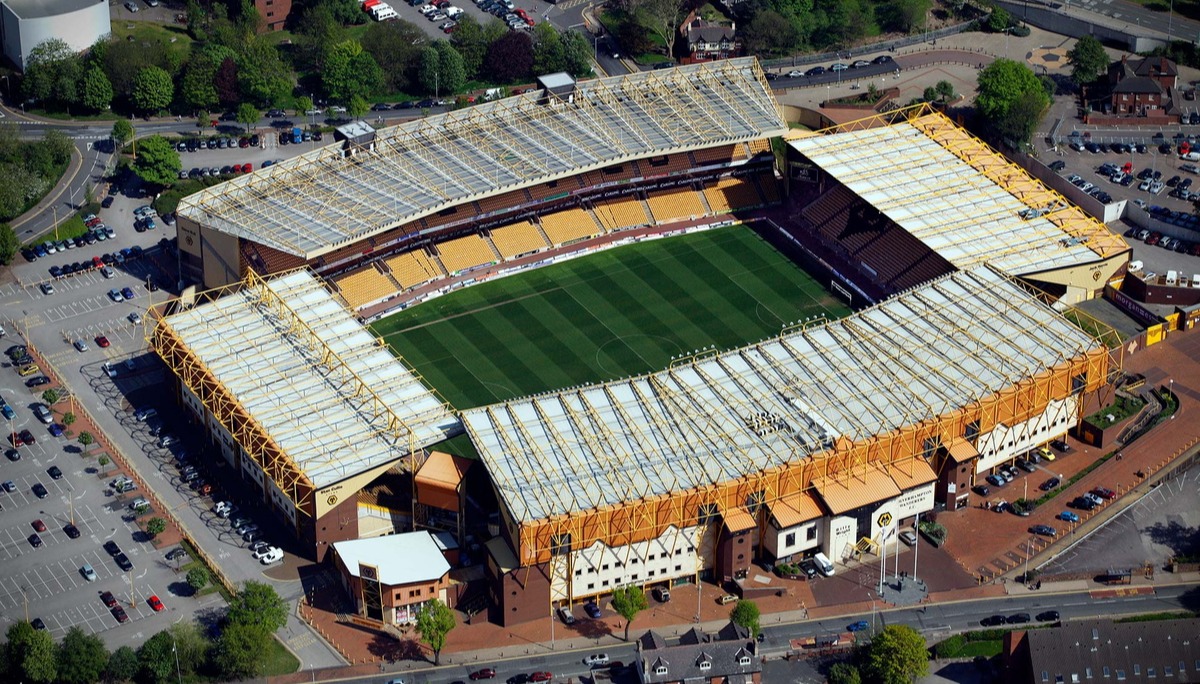
Molineux is the kind of ground that reminds you why groundhopping matters. Not because it's perfect — it isn't — but because it carries genuine weight. This is a place where the history isn't decorative; it's structural. You feel it in the stands, in the noise, in the way the city and the club are so completely bound together that you couldn't separate them if you tried. Come here once and you'll understand why Wolves supporters talk about this place the way they do.
Where They Come From
Wolverhampton is a Black Country city that has never pretended to be something it isn't. It sits at the industrial heart of the West Midlands, hemmed in by Birmingham to the east and the old mining and manufacturing towns to the west, and it has always had to fight for its identity against bigger neighbours. Wolves are that identity. Founded in 1877, they are not a club that exists in spite of Wolverhampton — they are Wolverhampton, in the same way that the Sunbeam car works and the steel trades once defined the place. The gold and black kit is not a colour scheme; it's a statement of belonging. In a region crowded with big clubs and fierce loyalties, Wolves have always stood apart, and Molineux is where that separateness is most keenly felt.
Four Sides
Molineux holds just over 32,000 and feels every bit of it. The ground sits on Waterloo Road, close enough to the city centre that you can see the town from the upper tiers, and the approach from the station takes you past the famous Billy Wright statue outside the main entrance — a reminder, if you needed one, of what this club once was at its absolute peak. The Stan Cullis Stand dominates the south end, named after the manager who built the great Wolves sides of the 1950s, and it gives the ground a sense of occasion that a lot of Premier League venues have quietly lost. The Steve Bull Stand runs along the side, and the Jack Harris Stand and the Sir Jack Hayward Stand complete the enclosure. All four sides are covered, which means the noise builds and stays. The floodlights are modern uprights rather than the old corner pylons, which is a minor loss aesthetically, but the sight lines are good throughout and the pitch — a full 105 by 68 metres of grass — looks immaculate under the lights on a winter evening. There's nothing gimmicky here. It's a football ground built for watching football.
Away Day Reality
Away fans are housed in the upper and lower tiers of the Jack Harris Stand at the northern end, and the honest assessment is that it's a decent enough allocation without being exceptional. The view from the upper tier is genuinely good — you're high enough to see the whole pitch clearly, and the covered roof keeps the noise in. The lower tier can feel a little flat if your numbers are thin, but pack it out and it works. Stewards at Molineux have a reputation for being firm rather than friendly, so travelling supporters are advised to keep things sensible. The home support in the Sir Jack Hayward Stand at the south end generates real noise when Wolves are on top, and the atmosphere on a big matchday is one of the better ones in the top flight. Away fans who make the trip tend to come away with a proper matchday memory, even when the result doesn't go their way.
The Walk In
Wolverhampton station is about a ten-minute walk from the ground, and it's a straightforward one — head north up Waterloo Road and Molineux appears on your left. The West Midlands Metro also stops at Wolverhampton station and at Pipers Row, both roughly the same distance, so if you're coming from Birmingham on the tram it drops you in the right part of town. There are bus stops directly outside the ground on Waterloo Road if you're coming from further afield. Street parking exists in the surrounding residential streets but fills quickly, and the city centre car parks are a more reliable option if you're driving. The walk from the station takes you through the edge of the city centre, past enough pubs and food spots to make the pre-match feel like a proper day out rather than a dash to the turnstile.
The Arc
The story of Wolves is one of the most dramatic in English football. In the 1950s, under Stan Cullis, they were arguably the best club in the country — three First Division titles, two FA Cups, and a series of famous floodlit friendlies against European opposition that helped plant the seed for what would become the European Cup. Then came the long decline: relegation to the Fourth Division by 1986, financial crisis, near-extinction. Sir Jack Hayward's money and the eventual arrival of Mick McCarthy steadied the ship, but it was the Fosun International takeover in 2016 and the appointment of Nuno Espírito Santo that transformed everything. Back-to-back promotions, a Premier League return, Europa League football, and a squad built with genuine ambition. The fall and the comeback are both part of what makes Molineux feel charged. Supporters here know what it means to lose everything and rebuild it. That knowledge doesn't leave a ground.
Before and After
Wolverhampton's city centre is close enough to make the pre-match genuinely worthwhile, and there are plenty of options within a short walk of the ground. None of the nearby pubs have confirmed away-friendly status in the data available, so the sensible approach is to use your judgement and read the room — on a big derby or a high-stakes fixture, the city centre can get lively. The options closest to the ground include:
- Wolverhampton Arts Centre (Dunkley St, WV1 4AN) — just a couple of minutes from the ground, a relaxed venue with a strong Google rating that tends to attract a mixed crowd.
- The Lych Gate Tavern (44 Queen Square, WV1 1TX) — one of the better-rated pubs in the city centre, a proper pub with character worth the short walk.
- The Stile Inn (3 Harrow St, WV1 4PB) — highly rated and close enough to be convenient, a solid option before kick-off.
- The Giffard Arms (64 Victoria St, WV1 3NX) — another well-regarded city centre pub, good for a pre-match pint in less frenetic surroundings.
- The Great Western (Corn Hill, WV10 0DG) — near the station and a natural first stop off the train, with a strong reputation and a good rating.
- The Moon Under Water (53-55 Lichfield St, WV1 1EQ) — the Wetherspoon option if you want cheap and reliable; does what it does.
Inside the ground, the catering is standard Premier League fare — pies are fine rather than memorable, and the queues move reasonably well at half-time if you time it right. The matchday programme is worth picking up if you're a regular groundhopper; Wolves put effort into theirs. The Sir Jack Hayward Stand is where the noise comes from, and on a big night under the floodlights, when Molineux is full and the gold scarves are out, it is genuinely loud. That's the version of this ground you want to catch.
Track every ground you visit
Log your visits, discover new grounds nearby, and see your groundcount grow.
| Download on the App Store | Get it on Google Play |