London Stadium — West Ham United
West Ham's move to the Olympic Stadium remains one of English football's most debated relocations. Here's what you actually find when you make the trip to Stratford.
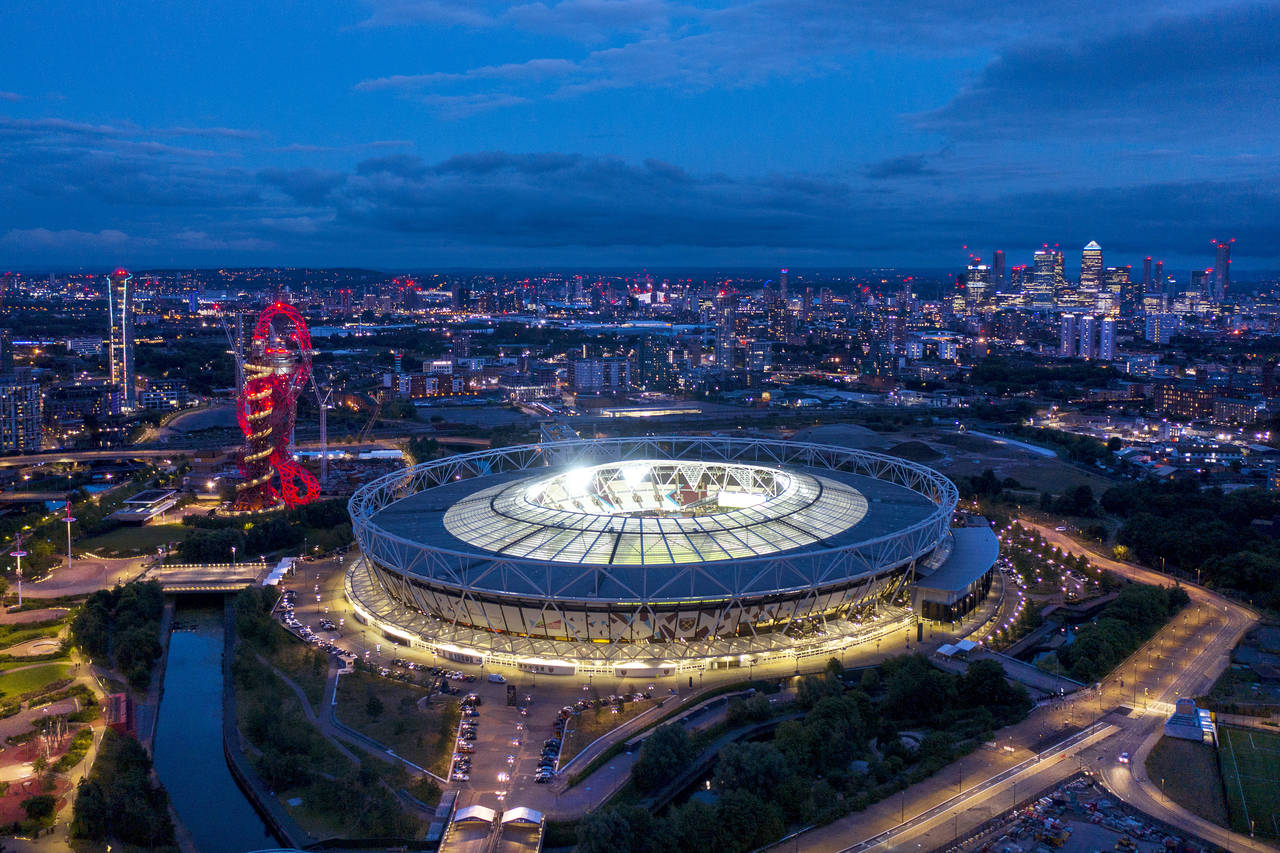
The London Stadium is the most argued-about ground in English football, and that argument is worth having before you go, because it shapes everything you experience once you're inside. This is not a football ground that became a stadium — it is an athletics stadium that football was asked to move into, and no amount of rebranding or reseating has fully resolved that tension. For a groundhopper, that makes it genuinely fascinating. It is a case study in what happens when the sport is retrofitted into a space that was never designed to hold it.
Where They Come From
West Ham United spent 112 years at the Boleyn Ground on Green Street in Upton Park — a tight, terraced, working-class corner of east London where the ground sat cheek-by-jowl with the houses and the chippies and the market stalls. The move to Stratford in 2016 was sold as progress, as legacy, as the club finally getting the platform its ambitions deserved. What it actually meant was leaving a community that had grown up around the club and relocating to a regenerated park built for a fortnight of athletics. The supporters who made the Boleyn what it was — the noise, the proximity, the intimidation — did not simply pack up and follow. Some did. Some didn't. The identity question has hung over the club ever since, and you feel it the moment you walk through the park gates.
First Impressions
Arriving at the London Stadium is an experience unlike any other matchday in England, and not entirely in a good way. The ground sits inside Queen Elizabeth Olympic Park, which means you approach it across wide, landscaped concourses designed for crowds of 80,000 moving in every direction at once. On a Premier League matchday it feels oddly spacious — even with 60,000 people heading in, the park swallows them. The structure itself is unmistakably an athletics venue: the distinctive wrap-around roof, the curved bowl, the sheer scale of it. Inside, the running track has been covered and the lower seating moved closer to the pitch, but the distance between the front row and the touchline remains significant by any football standard. The upper tiers are steep and the views from up there are actually decent, but the lower bowl — particularly at the sides — can feel disconnected from the action in a way that Upton Park never did. The floodlights are integrated into the roof structure rather than the old pylon style, which suits the architecture but removes one of the visual signatures of a proper football ground. It holds 60,000, and when it's full it is loud in a diffuse, echoey way — noise bouncing off the roof rather than being generated from close quarters.
Away Day Reality
Away fans are housed in a section of the upper tier at one end, and the honest assessment is that it is functional rather than memorable. The views are fine — you're high up, the sight lines are clear, and you can see the whole pitch without obstruction. But you are a long way from the pitch, and the separation between the away end and the home support is considerable. There is no real sense of being pressed up against the home fans, no crackle of proximity. The atmosphere generated by the away end can feel like it dissipates into the roof before it reaches anyone. On the plus side, access and stewarding are generally well-organised, and away supporters are not made to feel unwelcome in the way they might be at some grounds. It is a safe, comfortable, slightly antiseptic away day experience — which is either a relief or a disappointment depending on what you came for.
The Journey In
Getting to the London Stadium is genuinely easy, which is one of the things it has unambiguously over the Boleyn Ground. Hackney Wick station on the Overground is about a ten-minute walk and is the best option if you're coming from the north or east — the walk through the park from that direction is pleasant and gives you a proper sense of the scale of the place. Stratford International is eleven minutes on foot, and Stratford itself — served by the Tube, the DLR, the Overground, and National Rail — is about thirteen minutes. On a matchday the park fills with supporters from all directions and the signage is clear. There is no real street parking situation to speak of; this is a public transport destination by design, and it works. If you're coming from central London, the Central or Jubilee line to Stratford is the obvious call.
How They Got Here
West Ham's story is one of perpetual almost. They produced more England World Cup winners than any other club in 1966 — Moore, Hurst, Peters — and have a tradition of developing technically gifted players that runs from that era through to the academy sides of the 1990s. But league titles have eluded them entirely, and the club has spent much of its existence oscillating between the top flight and the Championship, occasionally threatening to become something more and then retreating. The move to the London Stadium was supposed to change the calculus — bigger crowds, bigger revenues, bigger ambitions. The years since have been turbulent: fan protests, boardroom controversy, a Europa League run that briefly made the ground feel like it might work after all. The Boleyn Ground was demolished in 2018. What replaced it, in footballing terms, is still being worked out.
Before and After
The area around the London Stadium has changed beyond recognition since the 2012 Olympics, and the drinking options reflect that — this is not a traditional football pub landscape, but there is plenty to explore if you know where to look.
- Riverside East (Stratford) (Queen Elizabeth Olympic Park, 5 Thornton St) — a park-side bar right on the doorstep of the ground, convenient for a pre-match drink in the open air.
- Two More Years (7 Roach Rd, Fish Island) — a well-regarded bar on Fish Island with a strong rating; worth the short walk if you're early.
- Barge East (River Lee, Sweetwater Mooring, White Post Ln) — a converted Dutch barge on the River Lee with a 4.4 rating; one of the more characterful options in the area and worth seeking out.
- HERA (4 Arber Wy, Stratford Cross) — the highest-rated option nearby at 4.8; a newer bar in the Stratford Cross development.
- All My Friends (Unit 1, Hamlet Estate, 96 White Post Ln) — part of the Hackney Wick creative cluster, relaxed and well-regarded.
- CRATE Bar & Pizzeria Hackney Wick (Unit 7 Queen's Yard) — a Hackney Wick institution with decent pizza and craft beer; gets busy on matchdays but handles it well.
- Howling Hops Brewery and Tank Bar (Unit 9A Queen's Yard, White Post Ln) — a proper brewery tap serving straight from the tanks; one of the best pre-match options in the area if you care about your beer.
- The Cow (4 Chestnut Plaza, Montfichet Rd) — closer to Westfield, straightforward pub option near the ground.
- Grow (Main Yard, 98C Wallis Rd) — another Hackney Wick bar with a good reputation; part of the same creative-industrial cluster as CRATE and Howling Hops.
- Hackney Bridge (Units 1-28, Echo Building, E Bay Ln) — a large multi-unit development with bars and food; good for groups.
- Bat & Ball Stratford (2 Montfichet Rd) — a Wetherspoons near Westfield; reliable and cheap if that's what you need.
- The Lord Napier Star (25 White Post Ln) — a Hackney Wick pub with real character and a strong local following; one of the better traditional options in the area.
- Number 90 Bar Hackney Wick (90 Wallis Rd) — a long-standing Hackney Wick venue with a good atmosphere.
Inside the ground, the concourse food and drink is what you'd expect from a venue of this scale and corporate ambition — overpriced, efficiently delivered, and unlikely to surprise you. The programme is worth picking up as a record of the occasion. The loudest part of the ground on a good day is the lower tier behind the goal at the home end, where the more vocal supporters congregate and make a genuine effort — but it takes a big match and a willing crowd to make the London Stadium truly roar. When it does, you understand why the project was attempted. When it doesn't, you find yourself thinking about Green Street.
Track every ground you visit
Log your visits, discover new grounds nearby, and see your groundcount grow.
| Download on the App Store | Get it on Google Play |