City of Manchester Stadium — Manchester City
Built for the 2002 Commonwealth Games and handed to City like a gift, the Etihad is modern, vast, and unmistakably a product of its era — but East Manchester gives it something a purpose-built bowl rarely has.
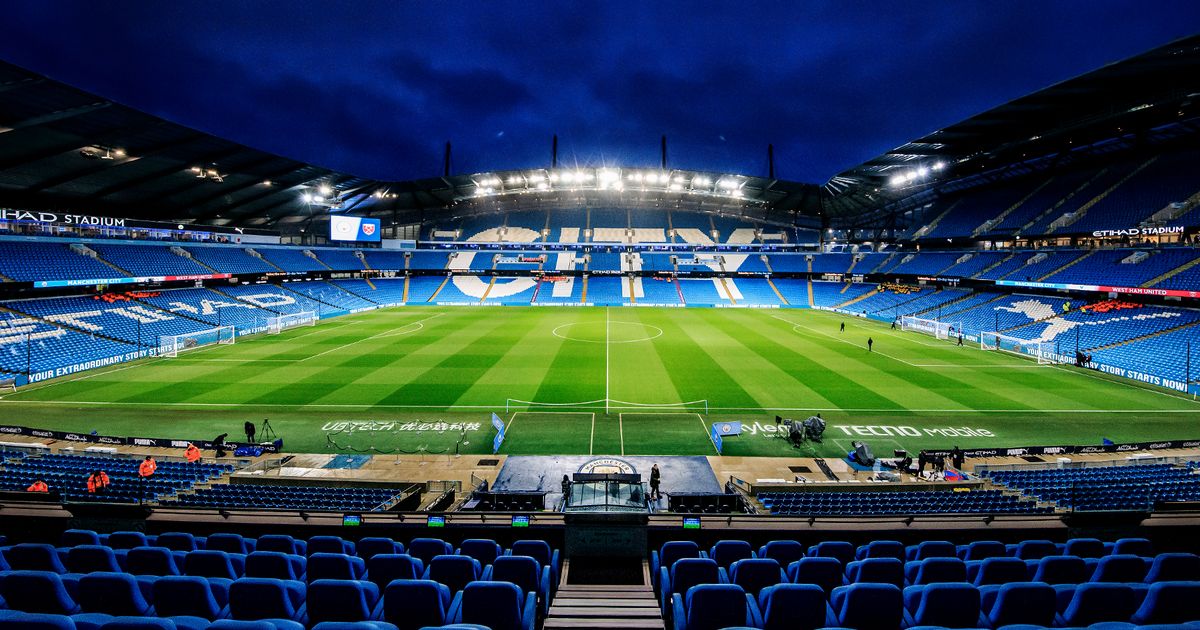
The City of Manchester Stadium is not a ground that pretends to be something it isn't. It was built for an athletics event, converted for football, and then — as the money arrived — expanded into one of the most formidable matchday environments in the country. It is not Anfield. It is not the old Maine Road. But on a European night with 55,000 inside it, it is something else entirely, and any groundhopper who dismisses it as a corporate bowl has probably never stood in it when City are a goal up in the second half.
Where They Come From
East Manchester is the part of the city that the tourist maps tend to skip. Clayton, Beswick, Gorton — these are working neighbourhoods built around industries that have largely gone, and the ground sits on Ashton New Road like a spaceship that landed and decided to stay. City were always the club of this side of Manchester, the club of the terraced streets rather than the suburbs, and even as the ownership and the wage bill have transformed beyond recognition, the geography hasn't moved. The Etihad Campus now sprawls across what was once derelict land, and there's something genuinely strange about watching a billion-pound training complex rise out of a neighbourhood that still has the bones of its industrial past visible on every corner. That tension — between the global project and the local roots — is what makes Manchester City in 2024 more interesting than their rivals would ever admit.
First Impressions
You see the ground long before you reach it. The roof line is distinctive — a continuous cable-stayed canopy that wraps all the way round, giving the whole thing a sense of enclosure that belies its size. From Ashton New Road it looks enormous, and it is: 55,000 seats across four steep, continuous tiers, with no running track and no wasted space between the front row and the touchline. The lower tiers are close to the pitch in a way that surprises first-timers — this was a deliberate conversion decision, and it works. The Colin Bell Stand on the south side is the largest, and the North Stand behind the goal is where the noise tends to gather. Floodlights are integrated into the roof structure rather than standing as separate pylons, which is clean and modern but does mean you lose one of the great sights of English football — the four-pylon floodlight silhouette against a winter sky. The ground is officially the City of Manchester Stadium, though it has been known commercially as the Etihad since 2011, and locals use both interchangeably depending on their feelings about shirt sponsorship.
Away Day Reality
Away fans are housed in a section of the South Stand — seated, covered, with a decent enough view, though the sheer scale of the place can make a travelling contingent feel rather small. The sightlines are good; there are no pillars to speak of and the rake is steep enough that you're not spending the match peering round someone's head. What you won't get is the sense of being pressed into a tight, noisy end with the home support inches away — the ground is too big and too well-organised for that kind of friction. City supporters are generally fine with away fans, not particularly hostile, which is either a sign of confidence or a sign that they've seen enough of the world to not get worked up about it. The away allocation can feel generous or tight depending on the fixture, so check before you travel.
The Journey In
The Metrolink is the obvious answer. Velopark stop on the Ashton line puts you about five minutes from the turnstiles, and on matchday the trams run frequently enough that you won't be waiting long. Clayton Hall is another option at around eight minutes' walk. If you're coming by train, Ashburys on the Stockport line is a twelve-minute walk and often overlooked — it's quieter than the tram and drops you in from a different angle, which is worth knowing if you want to avoid the main crowds. Buses run along Ashton New Road and stop close to the ground. Driving is possible but the surrounding streets are residential and parking is managed, so factor in time. The walk from the city centre is doable — about thirty-five minutes from Piccadilly — and takes you through Ancoats and along the canal, which is a better route than it sounds.
How They Got Here
The story of Manchester City in the twenty-first century is one of the most dramatic in English football, and it starts not with Sheikh Mansour's 2008 takeover but with the move to this ground in 2003. They left Maine Road — a proper old ground on Moss Side, opened in 1923, with all the character and inconvenience that implies — for a converted athletics venue, and for a few years it felt like a strange fit. The ground was too big for the club they were, the empty seats a weekly reminder of the gap between ambition and reality. Then the money arrived, and the gap closed faster than anyone thought possible. Four Premier League titles in five seasons, a Champions League, a domestic treble — the transformation has been so complete that it's easy to forget the years of near-misses, relegations, and the particular gallows humour that City supporters developed as a survival mechanism. That history hasn't been erased. It's just been buried under silverware, and the supporters who lived through it carry it with them still.
Pubs, Pies & Matchday
The pub situation around the Etihad is honest rather than spectacular — this is a residential area on the eastern edge of the city, not a pub-lined high street, so manage expectations accordingly. The options closest to the ground include the following:
- Waffle & Chill (570 Ashton New Rd, Clayton, M11 4RP) — a short walk from the ground on Ashton New Road; away-friendly status unknown, so use your judgement.
- Grove Inn (652 Ashton New Rd, Clayton, M11 4AT) — a local pub on the main road, rated well by those who've used it; away-friendly status unknown.
- Mary D's Beamish Bar (13 Grey Mare Ln, M11 3DQ) — one of the better-rated options in the area, a short walk from the ground; away-friendly status unknown.
- The Corner Shop (Rylance St, Beswick, M11 3NA) — a neighbourhood local in Beswick, well-regarded; away-friendly status unknown.
- The Townley (31 Albert St, Beswick, M11 3QW) — another solid local option in Beswick, rated highly; away-friendly status unknown.
If you want a guaranteed pre-match drink without any uncertainty, the city centre — Piccadilly or the Northern Quarter — is the safer bet, and you can get the tram out from there. Inside the ground, the concourses are wide and well-stocked, the pies are above average for a ground this size, and the programme is a glossy production that tells you more about the commercial operation than the football club — but pick one up anyway. The noise in the North Stand when City are in full flow is the real reason you came.
Track every ground you visit
Log your visits, discover new grounds nearby, and see your groundcount grow.
| Download on the App Store | Get it on Google Play |