National Hockey Stadium — MK Dons
A repurposed hockey venue dropped into a Buckinghamshire grid, Stadium MK is not pretty — but it's bigger and louder than you'd expect from MK Dons.
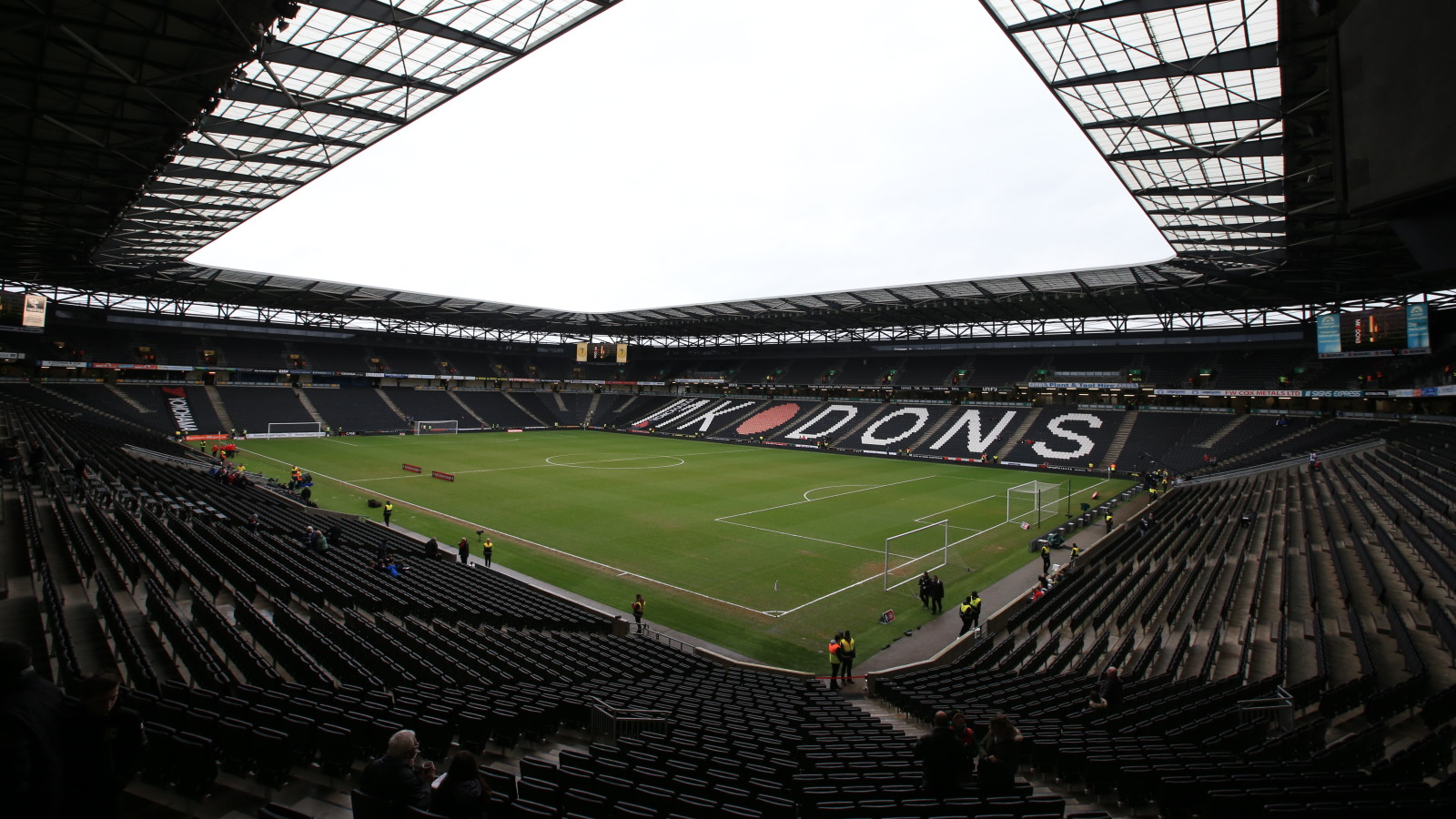
There is no polite way to ease into a discussion of Stadium MK. It is a repurposed national hockey venue built in a grid-planned new town, home to a club that was itself transplanted from south London under circumstances that still anger a generation of Wimbledon supporters. If you go in expecting something to love at first sight, you will be disappointed. If you go in expecting something genuinely strange and oddly compelling — a 30,000-capacity ground surrounded by retail parks, playing host to a club trying to build identity from scratch — then this trip will give you plenty to think about on the way home.
Town and Club
Milton Keynes is England's most deliberate city. Planned, built, and populated in one sustained act of postwar civic will, it has roundabouts where other places have crossroads, and retail parks where other places have market squares. Football was not part of the original blueprint. MK Dons exist here not because the town grew a club organically, but because AFC Wimbledon's predecessor was moved here by the Football League in 2003 — one of the more controversial decisions in English football's modern history. The Dons have spent the two decades since trying to earn a genuine place in a community that wasn't sure it needed them, and there's something quietly admirable about the fact that they've largely managed it. MK now turns out for them. It just took a while.
First Impressions
Stadium MK — opened in 2007 and commonly known by that nickname rather than any sponsor's name that's been attached to it over the years — is a large, functional bowl sitting in what amounts to a commercial estate off Grafton Gate. The approach from any direction involves a lot of tarmac, a lot of car park, and very little of the urban texture that gives grounds in older towns their character. It was designed as a national hockey facility and converted for football use, and you can feel that in the proportions — the pitch sits low, the stands rise steeply and uniformly, and the roof gives good cover on three sides. The floodlights are the modern upright sort, bolted to the stands rather than standing free as pylons. It's a modern build with a conference centre attached, and it looks it. What surprises you, once you're inside, is the noise. The steep rake and covered roof trap sound well, and when MK get behind their team the place actually rocks. That's genuinely unexpected for a 30,500-capacity ground that's rarely much more than a third full in League One.
What Away Fans Get
Away supporters are housed in a section behind one of the goals — seated, covered, with a decent view of the pitch. The rake is steep enough that sight lines are largely unobstructed, which is more than you can say for a lot of away ends at grounds this size. It doesn't have the character of a proper away terrace — there's no standing, no crush barrier to lean on, no sense that the architecture was built with vociferous away support in mind. But it's comfortable, the view is good, and you won't come away with a crick in your neck from peering around a pillar. Away fans are treated with reasonable civility, which counts for something.
Arriving
This is where Stadium MK will test your patience if you've arrived by train. Milton Keynes Central, the main station, is a full fifty minutes on foot — which is to say, don't do it. The more practical train options are Fenny Stratford or Bletchley on the Marston Vale line, both around twenty minutes' walk, though neither is on a main line and services are infrequent, so check your times before you commit. In reality, most people drive or take the bus — there are stops directly outside the ground, served from the town centre, with a three-minute walk to the turnstiles. If you're travelling by car, there's ample parking nearby, as you'd expect from a ground built in a city whose infrastructure was designed around the car from day one. It is, in that sense, perfectly suited to its location.
How They Got Here
The story of MK Dons is inseparable from the story of Wimbledon FC, and it's worth being honest about that rather than skirting it. The Football League sanctioned the club's relocation from south London to Milton Keynes in 2003 — a move that the original supporters refused to accept, forming AFC Wimbledon in its place. MK Dons renounced all claim to Wimbledon's history and trophies in 2007, donating the silverware to the Wimbledon museum — a gesture that settled nothing but at least showed some self-awareness. What the Dons have built since is a club trying to earn legitimacy through results and community engagement rather than borrowed heritage. They've had their moments — a League One title, a few decent cup runs — and they've also had their struggles, yo-yoing between the second and third tiers. The current project feels like what it is: a mid-table League One club working out who they are. That's not nothing.
Pubs, Pies & Matchday
The pub situation around Stadium MK is, bluntly, poor. The ground sits in a commercial estate, and the nearest options are a chain pub attached to the retail development rather than anything with atmosphere or character. For a proper drink before the match, you're better off heading into the town centre — a bus ride away — where you'll find the usual range of Wetherspoons and high street boozers, most of which are fine for away fans in ordinary circumstances, though for a derby you'd want to check ahead. Inside the ground, the food is functional chain-stadium fare — pies that do the job without inspiring any great loyalty, hot drinks that warm you up on a November night. The programme is a decent read by modern standards. What the matchday experience really comes down to is whether the home support is in full voice — on a good day, with something riding on the fixture, the steep stands do their acoustic job and the place feels alive. It just needs the occasion to unlock it.
Track every ground you visit
Log your visits, discover new grounds nearby, and see your groundcount grow.
| Download on the App Store | Get it on Google Play |