Brick Community Stadium — Wigan Athletic
From JJB to DW to The Brick — Wigan's ground has worn many names but the story inside is one of English football's most dramatic rises and falls.
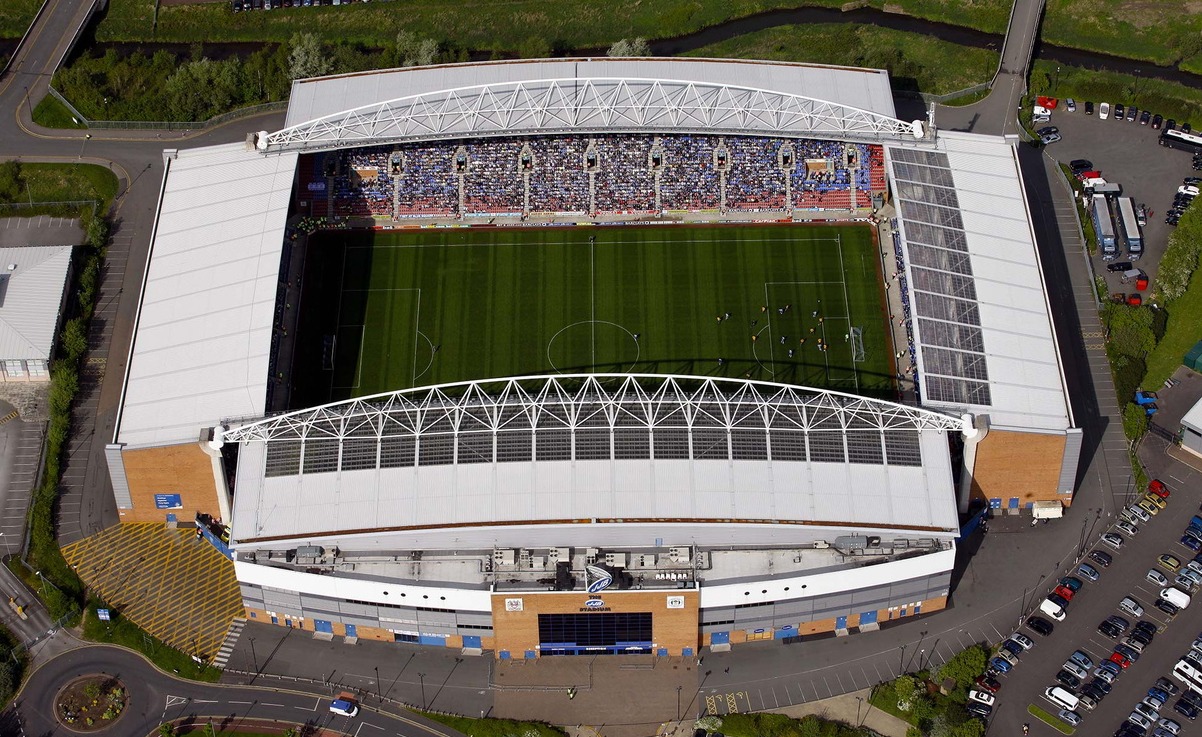
Wigan Athletic's ground sits in Robin Park like a question nobody quite finished answering. It opened in 1999 as a statement of ambition from a club that hadn't yet reached the top flight, and within a decade it had hosted Premier League football and an FA Cup winner. That arc — from non-league obscurity to Wembley glory and back through administration — is baked into the concrete here. You come to understand something about English football's capacity for both miracle and ruin by spending a matchday at this place.
Where They Come From
Wigan is a rugby league town first and argues about it second. Athletic have always had to fight for the back pages against the Warriors, which perhaps explains a certain defiance in the club's culture — the sense that they were never supposed to get where they got, and they knew it. Sat between Manchester and Liverpool, with both cities' clubs pulling at the region's loyalties, Wigan Athletic built their identity on being the underdog with something to prove. The town is post-industrial, proud, and not inclined towards sentimentality. The club reflects that.
First Impressions
The ground is a bowl — four roughly matching stands, opened as the JJB Stadium, rechristened the DW Stadium in 2009 after Dave Whelan's sporting goods empire, and now carrying the name of a local housing association as the Brick Community Stadium. Locals have called it various things over the years and largely picked whichever sponsor name was current without much fuss. It is functional and cleanly built, with modern uprights rather than old pylon floodlights, and a capacity just over 25,000 that feels cavernous when the club is drawing four or five thousand on a cold Championship or League One night. The South Stand is the noisiest end for home support; the main structure has an enclosed feel on three sides that can generate real noise when there's a crowd to fill it. When there isn't, it echoes. That contrast — Premier League stadium, lower-league attendance — is the defining visual tension of the place.
What Away Fans Get
Away supporters are housed in one corner of the ground, which gives you a decent enough view of the pitch but that corner-allocation feeling of being slightly peripheral to proceedings. It is covered, which matters in Wigan in January. The terrace is not steep enough to generate the compressed noise of a proper old-school away end, and the sightlines, while adequate, are not special. It is honest rather than inspired. The home support can be vocal when they're in the mood — particularly when the South Stand gets going — and there's no hostility towards travelling fans beyond the normal derby caveats. If you're here for a midweek fixture against one of the Lancashire sides, expect a sharper edge.
The Walk In
Both Wigan train stations — Wallgate and North Western, which sit virtually side by side in the town centre — are about an eighteen-minute walk to the ground. Head out through the town centre and across towards Robin Park; the route takes you through some fairly unremarkable retail and light industrial landscape before the ground appears. It is not a scenic approach. There's a retail park nearby and the A49 runs close, so driving is an option — parking around Robin Park is available on matchdays, though it fills early for bigger fixtures. The ground itself is well signed from the town centre. You won't get lost.
The Arc
The story of Wigan Athletic is one of the most compressed rises in the history of English football. Elected to the Football League only in 1978, they spent the early 1990s bouncing around the lower divisions before Dave Whelan's takeover in 1995 set off a transformation that brought them into the Premier League in 2005. They stayed there for eight seasons — longer than many predicted after the first — before the crowning achievement: beating Manchester City in the 2013 FA Cup final at Wembley, with Ben Watson's header doing what nobody expected. Three days later, they were relegated. Within two years they were in League One. The years since have involved two further administrations, points deductions, and relegation to League One again. The ground stands as a reminder of what was built, and what proved impossible to hold onto.
The Matchday
The pub situation around Robin Park is limited — this is a retail and leisure park rather than a traditional ground embedded in terraced streets, so there is no obvious cluster of pubs within a short walk of the turnstiles. Your best bet is to drink in the town centre before making the walk out, where you'll find plenty of options around the Wallgate and North Western station area. The ground itself has the standard concourse offering — pie and Bovril territory, nothing that will surprise you either way. The programme is worth picking up if you're groundhopping; it tends to have decent historical content. The South Stand, when it gets loud, reminds you what this place can sound like when the club is on the move. That doesn't happen every week. When it does, it's worth the trip.
Track every ground you visit
Log your visits, discover new grounds nearby, and see your groundcount grow.
| Download on the App Store | Get it on Google Play |