The Valley — Charlton Athletic
The Valley is one of English football's great comeback stories — a ground that was literally reclaimed by its own supporters, and still feels like it belongs to them.
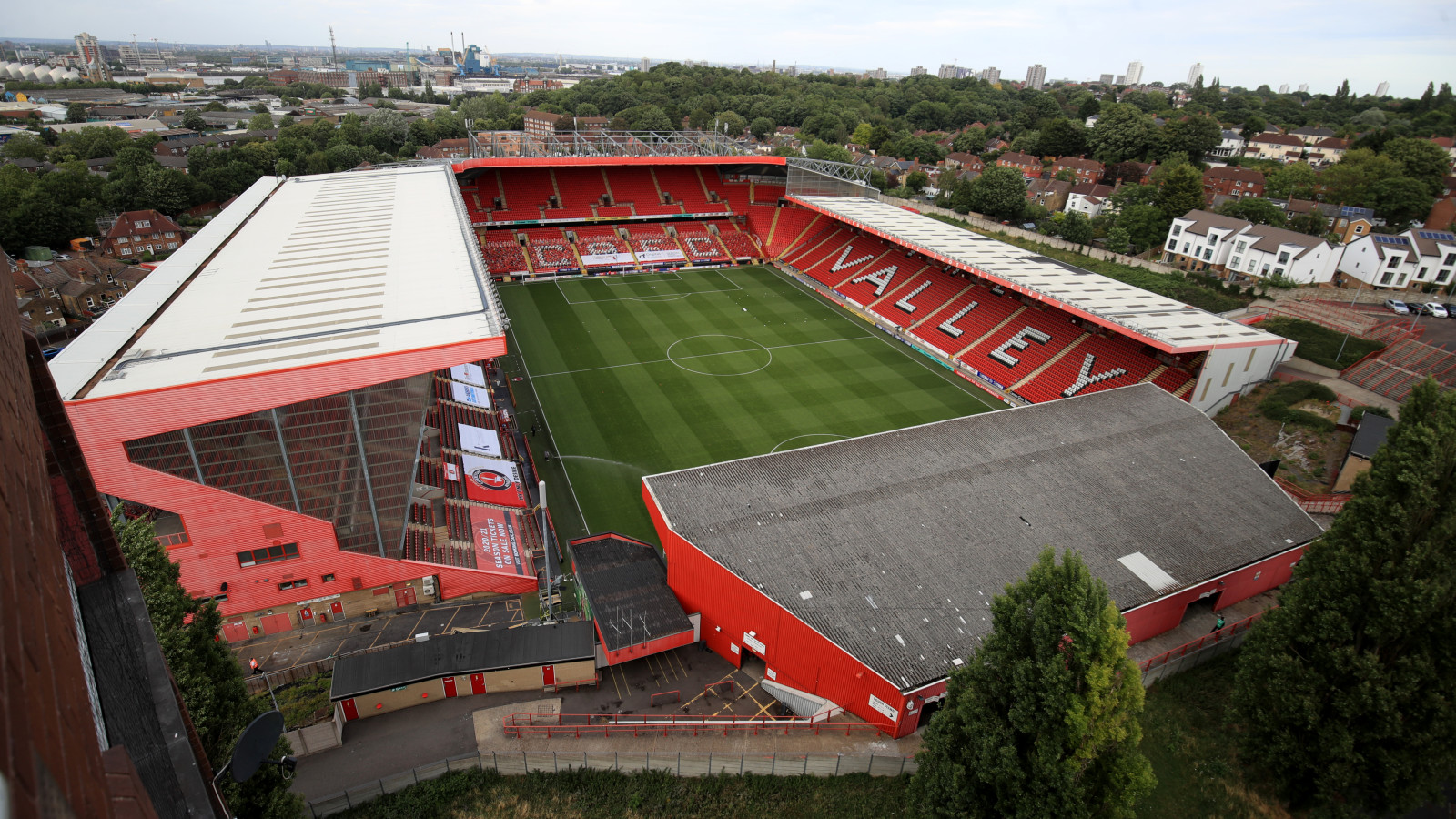
There are grounds you visit for the architecture, grounds you visit for the league position, and then there are grounds you visit because the story behind them is unlike anything else in English football. The Valley is the third kind. Charlton Athletic's home in SE7 is not the most glamorous ground in London, and it doesn't pretend to be — but it carries a weight of meaning that most 27,000-capacity grounds simply cannot match. Come here and you are standing somewhere that supporters fought, literally campaigned, and voted to get back. That matters.
Where They Come From
Charlton sits in that stretch of south-east London that the tube map forgot — wedged between Greenwich, Woolwich, and the Thames, close enough to the river to feel it on a cold matchday. It's a working-class corner of the city that has never quite been absorbed into the gentrification creeping westward from Deptford and Lewisham. The club reflects that. Charlton Athletic has always been a community club in the truest sense — not a marketing slogan, but a lived reality. They are surrounded by bigger London clubs pulling supporters in every direction, yet they have retained a core identity that feels genuinely local. The red kit, the addick, the Valley — these things mean something specific to people from this specific patch of London, and that specificity is exactly what makes a groundhopping trip worthwhile.
Four Sides
The Valley is a proper football ground — asymmetric, layered, and full of character. The most striking feature on arrival is the sheer scale of the North Stand, which looms over Floyd Road like a cliff face. It's a big, steep, covered single-tier stand that generates most of the noise on matchday and gives the ground its backbone. The Main Stand on the west side is older, lower, and more traditional — a long, covered seated stand with a slightly cramped feel that suits the ground perfectly. The South Stand is the away end, and the East Stand completes the picture: a two-tier structure that fills out the ground and gives it a sense of enclosure you don't always get at this level. The floodlight pylons are the old-school tall variety, visible from the approach roads, and they do exactly what floodlight pylons should do — tell you where you're going before you can see the ground itself. The pitch, at 102 by 67 metres, is compact enough that there are no bad seats. Sight lines throughout are good. The ground feels lived-in and honest.
The Away End
Away supporters are housed in the South Stand, which is a covered, seated end behind the goal. It's a decent allocation — good roof, reasonable rake, and a clear view of the pitch without any significant obstructions. The acoustics under the roof help travelling supporters make themselves heard, and the proximity to the North Stand means you get a proper sense of the home noise coming back at you, which is exactly what you want on a good away day. Stewarding is generally straightforward and professional. This is not a hostile ground for away fans — Charlton supporters tend to be more interested in their own team than in making your afternoon difficult, which is a quality that should be appreciated more than it is.
The Walk In
Charlton station on the National Rail network is your best bet — it's a five-minute walk to the ground along Floyd Road, and the route is well-worn and obvious. Trains run from London Bridge and Cannon Street, which makes this one of the more straightforward away days for anyone coming in from central London or beyond. The walk from the station takes you past the terraced streets that back onto the ground, and there's a proper matchday feel to it — scarves, programmes, the smell of food vans setting up. If you're coming by car, parking in the surrounding residential streets is possible but fills up quickly; the industrial areas off Anchor and Hope Lane offer some options if you arrive early. Westcombe Park station is a longer walk at around sixteen minutes but gives you a slightly different approach through quieter streets if you want to avoid the main crowd.
The Arc
The story of Charlton Athletic and The Valley is one of the most remarkable in English football. The club left the ground in 1985 — ground-sharing first at Selhurst Park with Crystal Palace, then at Upton Park with West Ham — and spent seven years away. What followed was extraordinary: supporters formed the Valley Party, stood candidates in local council elections, and campaigned publicly and politically to return to their home. They got 14,838 votes in the 1990 Greenwich Council elections. The council listened. Charlton came back to The Valley in December 1992, and the return match against Portsmouth drew scenes of genuine emotion that people who were there still talk about. The club then rose to the Premier League under Alan Curbishley, spending eight seasons in the top flight between 1998 and 2007, before a long and painful decline through the divisions under a series of disastrous owners. The Roland Duchâtelet era in particular left deep scars. But the supporters — organised, vocal, and battle-hardened by everything that came before — kept the pressure on, and the club has been rebuilding with more stable ownership since. The Valley has seen the full range of English football's possibilities. That history is in the walls.
Pubs, Pies & Matchday
There are several options within easy walking distance of the ground, and the area around Charlton village and the approach from the station gives you enough to work with before kick-off. Away-friendly status on most of these is unconfirmed, so use your judgement on derby days — but for a standard fixture, the area is generally relaxed.
- Fans' Bar (Harvey Gardens, SE7 8AJ, just off the ground) — the closest option to the turnstiles at barely 100 metres away, with a strong Google rating of 4.6; worth checking if it's open to all on the day you're visiting.
- The Royal Oak (54 Charlton Lane, SE7 8LA) — a short walk from the ground, well-rated at 4.4, and a traditional pub that fits the matchday mood.
- The Bugle Horn (6 The Village, SE7 8UD) — sits in Charlton village itself, a pleasant spot with a 4.2 rating and a bit more of a local feel away from the immediate ground area.
- Rose of Denmark (296 Woolwich Road, SE7 7AL) — further out on Woolwich Road, rated 4.4, and worth the slightly longer walk if the closer options are packed.
- Anchor & Hope (Riverside, SE7 7SS) — the furthest of the options at just under a kilometre, but it sits by the Thames and is a good shout if you want to make a proper afternoon of it before the match.
Inside the ground, the catering is functional rather than exceptional — standard matchday fare, but the pies are perfectly acceptable and the queues move reasonably well at half-time. Pick up a programme if you're a collector; Charlton's is one of the better-produced ones at this level. The North Stand is where the noise comes from, and on a good night — a promotion push, a cup tie, a derby — it can be genuinely loud. The Valley rewards a full matchday. Don't just turn up at five to three.
Track every ground you visit
Log your visits, discover new grounds nearby, and see your groundcount grow.
| Download on the App Store | Get it on Google Play |