Craven Cottage — Fulham FC
One of English football's genuinely irreplaceable grounds — a riverside setting, a Victorian cottage, and over a century of Fulham on the banks of the Thames.
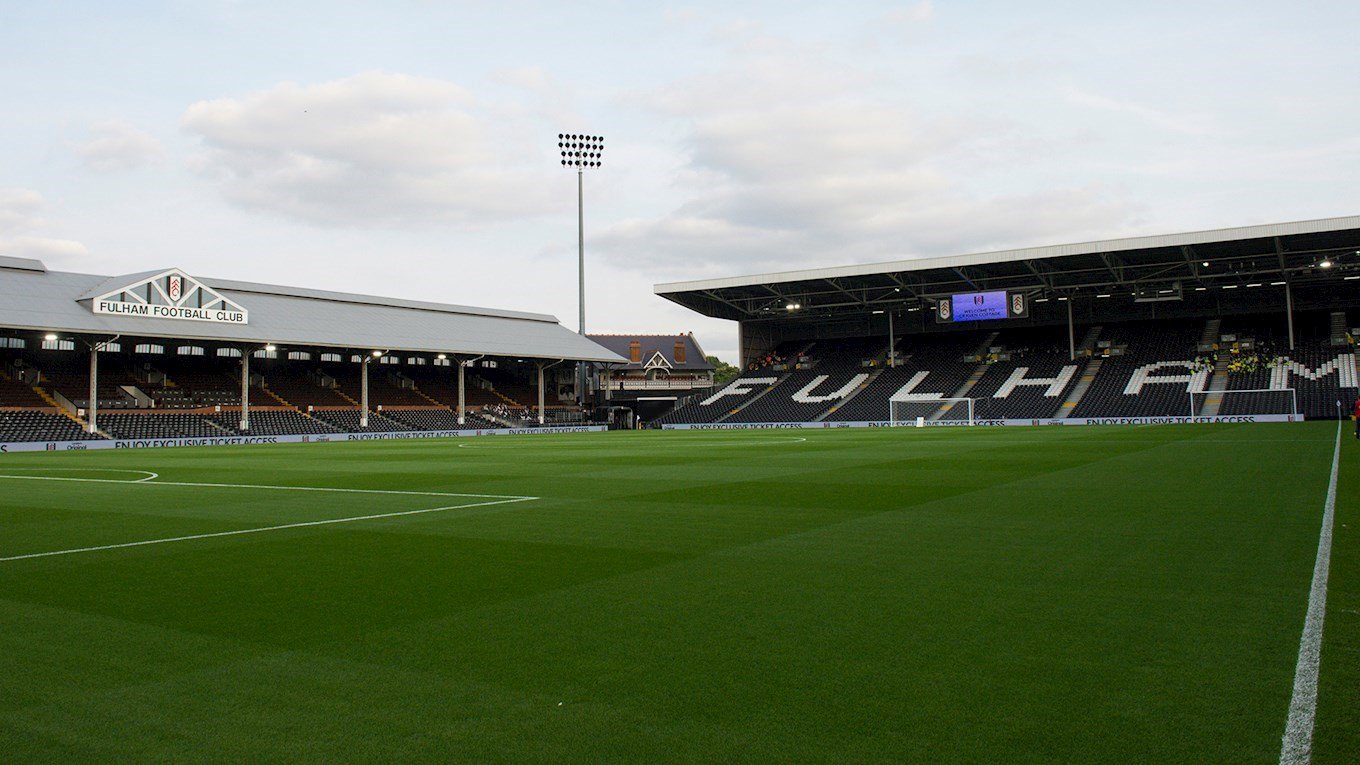
There are grounds you visit because you want the three points, and there are grounds you visit because you'd regret it if you never went. Craven Cottage is firmly the second kind. Not because Fulham are fashionable or because the Premier League adds a sheen of glamour — but because this particular rectangle of west London is one of the few remaining places in English football where the setting and the structure combine to make you feel the full weight of the game's history beneath your feet. You don't get many of these left.
Where They Come From
Fulham is the oldest Football League club in London, which surprises people who think of Chelsea — a ten-minute walk up the Fulham Road — as the area's natural representatives. The two clubs share a postcode but precious little else. Fulham has always felt like the quieter, more weathered presence: a club rooted in the professional classes and the river trades, in a stretch of west London that was working long before it was fashionable. The Thames defines this part of the city, and it defines Craven Cottage too. You can smell it on the walk in. The ground backs onto the river on one side — there are very few grounds in the Football League where that is literally true — and it shapes everything about the experience of being here.
First Impressions
The approach along Stevenage Road, with Bishops Park on your left and the ground's back wall on your right, already tells you something is different. The main stand — the Johnny Haynes Stand, named for the club's greatest player and the first man to earn £100 a week as a professional footballer — is a Victorian terrace façade in red brick, a listed building that Fulham are legally obliged to preserve. And rightly so. It's not grandiose; it's compact and beautifully proportioned, and it looks nothing like anything you'd find at a modern ground. Inside, the Cottage itself — the actual two-storey building in the corner from which the ground takes its name — sits between the Johnn Haynes Stand and the Hammersmith End, used now as offices, still standing exactly where it stood when the ground opened in 1896. The Riverside Stand runs along the Thames side, rebuilt in the early 2000s but sensitively done. The Hammersmith End and the Putnam End complete the four sides — a proper enclosed ground with grass banks and real sight lines. Floodlight pylons, old-school uprights rising from the corners. The pitch itself is tight, 100 yards by 65, which pushes the noise inward on a busy matchday. It's not the biggest ground in London. It doesn't need to be.
Away Day Reality
Away supporters are housed in the Putney End — a covered terrace that is, if you're being honest, one of the more modest away ends in the top flight. The view is adequate rather than exceptional, there's limited legroom in the seated areas, and the facilities are basic. But the covered roof holds the noise, and if you've brought a decent following you'll make yourself heard. The home support in the Hammersmith End gives it back with interest on the right occasion. There's no hostility in the walk around — Fulham's crowd is largely civil and the stewarding is professional — but the Putney End will not be remembered as a great away terrace. It's functional. The setting around it, though, you will remember.
The Walk In
Putney Bridge tube station is the classic approach — District line, fifteen minutes' walk south and then west along the riverbank through Bishops Park. It takes a little longer than the map suggests but it's genuinely one of the better walks to any ground in London: the Thames on one side, the park on the other, the floodlights appearing over the treeline. Parsons Green (also District line) is slightly further at around eighteen minutes but gives you the option to approach along the Fulham Road. Putney rail station is twenty minutes on foot. There is minimal street parking, and you are in inner London — don't bother with the car. The bus stop directly outside the ground on Stevenage Road is served by a handful of routes and drops you essentially at the turnstile.
Their Story
Fulham have spent most of their existence as a yo-yo club — in and out of the top flight, rarely dominant, always present. The Johnny Haynes era in the late 1950s and early 1960s gave them their most celebrated period, and Mohamed Al Fayed's ownership through the 1990s and 2000s brought the club its most sustained spell in the Premier League, culminating in that extraordinary UEFA Cup final run in 2010, when they beat Juventus and Hamburg before losing to Atletico Madrid in extra time in Hamburg. That night — Bobby Zamora's goal, the Riverside Stand roaring — is the emotional peak of modern Fulham. Since then: relegations, promotions, and eventually a return to the top flight under Marco Silva that has looked genuinely settled. The club is owned now by Shahid Khan, the American businessman who has funded significant development including the new Riverside Stand expansion, and the trajectory feels upward. They have always been a club that fought to stay at their own ground, and for that alone you respect them.
Before and After
There are several options within reasonable walking distance of the ground. The general area is residential west London, so choices are spread across a few streets rather than concentrated in one obvious pre-match strip.
- Bishops (399 Fulham Palace Rd, London SW6 6TA) — a local pub on Fulham Palace Road, a few minutes' walk from the ground.
- The Crabtree (Rainville Rd, London W6 9HA) — a pub with riverside views on the Hammersmith side, worth the slightly longer walk for a pre-match pint in decent surroundings.
- The Brook & Badger (224 Munster Rd, London SW6 6AY) — a neighbourhood pub on Munster Road, solid and unfussy, a reasonable option if you want something quieter.
- Half Moon (93 Lower Richmond Rd, London SW15 1EU) — over in Putney, good ratings and a traditional feel; sensible if you're coming in on the Putney Bridge or Putney station routes.
- The Spencer Arms (237 Lower Richmond Rd, London SW15 1HJ) — another solid Putney option near the river end of Lower Richmond Road.
- Duke's Head (8 Lower Richmond Rd, London SW15 1JN) — a Putney riverside pub that rewards the walk.
None of the above have confirmed away-friendly status in our data, so use your judgement on derby days and check ahead if you're in a large group in away colours. Inside the ground, the catering is Premier League standard — overpriced and average, which is the universal truth of top-flight football food. Pick up the programme; it's one of the better ones in the division for actual editorial content. And if the sun is out and you've got a seat in the Riverside Stand, take a moment to look back across the pitch at the Cottage and the old Haynes Stand. Very few grounds in England give you that view. Make the most of it.
Track every ground you visit
Log your visits, discover new grounds nearby, and see your groundcount grow.
| Download on the App Store | Get it on Google Play |